
AI Summary
Show More
Quickly grasp the article's content and gauge market sentiment in just 30 seconds!
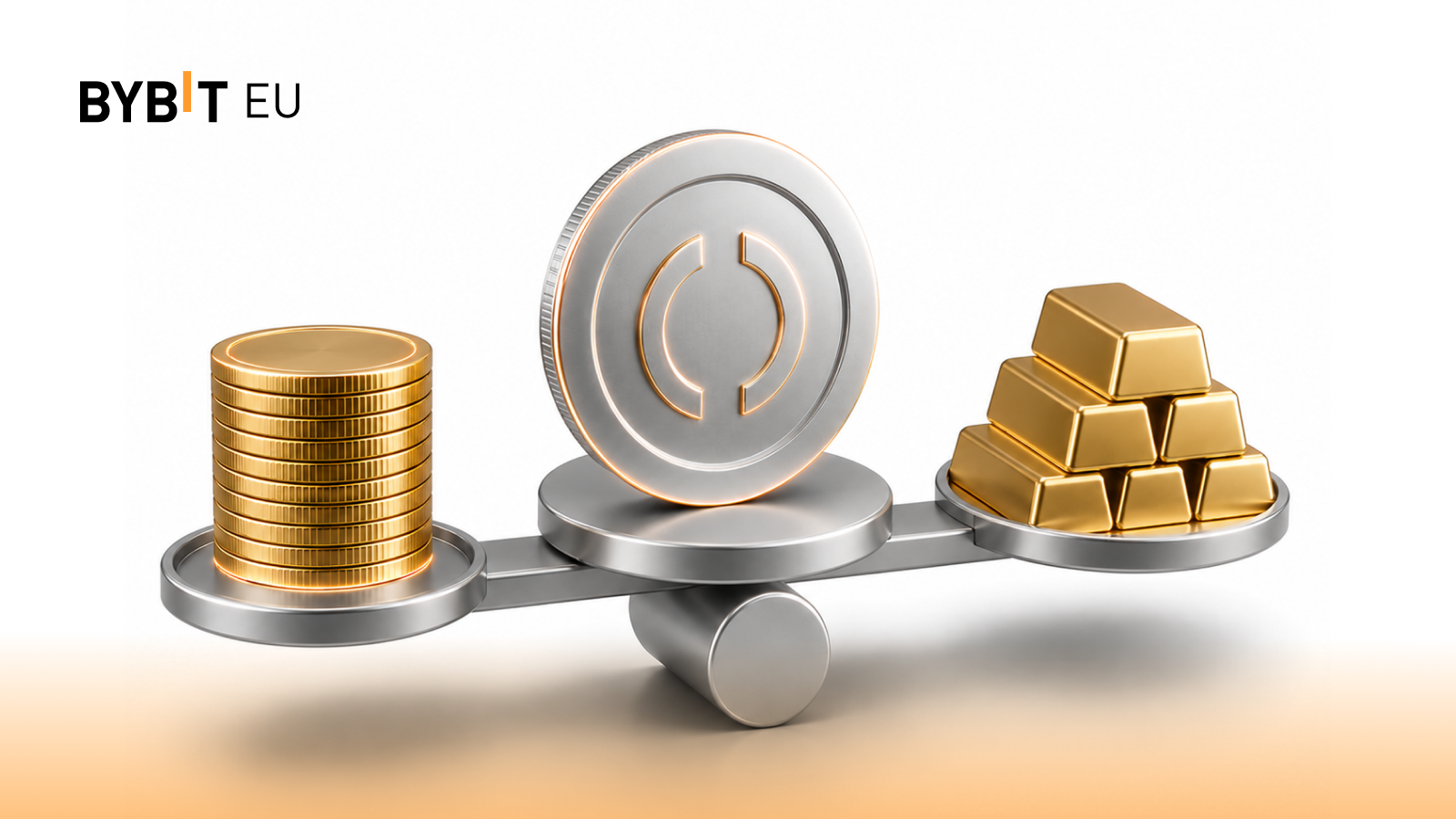
Stablecoins are a type of cryptocurrency designed to maintain a stable value, usually by being pegged to an underlying reserve asset. Most stablecoins are tied to fiat currencies such as the US dollar or euro. Others may be backed by commodities like gold or by a basket of assets.
Unlike highly volatile cryptocurrencies like Bitcoin, stablecoins combine blockchain efficiency with price stability, making them suitable for payments, trading, and decentralized finance (DeFi) applications.
Key Takeaways
Stablecoins are digital assets pegged to or backed by stable assets, suitable for trading, payments, and DeFi applications.
Stablecoins come in four types: fiat-backed, commodity-backed, cryptocurrency-backed, and algorithmic.
MiCAR-compliant stablecoins, such as USDC, are subject to regulatory requirements designed to improve transparency and oversight for European users.
Stablecoins are designed to maintain their value through a combination of collateral backing, algorithms, and trust in the underlying asset.
Fiat-backed: Pegged 1:1 to currencies like the US dollar. Each coin is backed by an equivalent fiat reserve.
Commodity-backed: Backed by tangible assets such as gold or oil.
Cryptocurrency-backed: Over-collateralized with other digital assets to absorb volatility.
Algorithmic: Supply adjusts automatically via smart contracts to maintain price stability.
The key principle is that the market trusts the backing asset, which helps ensure the coin maintains its peg.
Price stability depends on collateral reserves and the mechanisms that govern each stablecoin type:
Fiat-backed: Institutions hold reserves equal to the number of coins in circulation, allowing redemption at a fixed value.
Commodity-backed: Stability is derived from linking the coin to relatively low-volatility commodities.
Cryptocurrency-backed: Over-collateralization absorbs shocks from volatile crypto markets.
Algorithmic: Supply is automatically adjusted to respond to market demand and maintain the peg.
MiCAR-compliant stablecoins like USDC prioritize transparency and regulatory oversight, making reserves verifiable and trustworthy for European users.
Stablecoins are widely used in digital finance:
Transactions: Low volatility can make them suitable for domestic and international payments.
Crypto trading: Serve as a temporary safe haven during volatile market periods.
Decentralized finance (DeFi): Provide a stable medium of exchange for lending, borrowing, and smart contract applications.
Financial inclusion: Offer alternatives in countries with unstable banking systems or hyperinflation.
MiCAR-compliant stablecoins give users confidence when transacting in European digital finance ecosystems.
Pegged 1:1 to fiat currencies like the US dollar or euro. Reserves match the number of coins issued.
Pros:
Simple and easy to understand
Low volatility when pegged to stable fiat
Bridges traditional finance and blockchain
Cons:
Centralized and reliant on custodian institutions
Value affected if the underlying fiat depreciates
Example: USDC, a MiCAR-compliant stablecoin, is fully regulated and backed by audited reserves.
Pegged to commodities such as gold or oil, allowing investors to access commodity exposure via blockchain.
Pros:
Price stability tied to tangible assets
Potential long-term appreciation
Cons:
Redemption can be complex for non-fiat commodities
Centralized oversight needed for trust
Backed by other cryptocurrencies, often using over-collateralization to manage volatility. Typically decentralized and issued through smart contracts.
Pros:
Decentralized and transparent
Quick conversion and high liquidity
Cons:
Complex mechanisms may limit adoption
Over-collateralization can be expensive
Non-collateralized coins that maintain stability via algorithms and smart contracts, adjusting supply according to market demand.
Pros:
Highly decentralized
No reliance on collateral
Cons:
Peg maintenance can fail if supply adjustments are insufficient
Market trust is critical for stability
Stablecoins provide the stability of traditional assets combined with blockchain efficiency. MiCAR-compliant stablecoins such as USDC offer regulated, transparent, and reliable options for transactions, trading, and DeFi in Europe.
While not designed for high returns, they are a digital alternative for storing value, transacting globally, and bridging the gap between fiat and crypto ecosystems.
Investing in crypto‑assets is associated with risks, including high volatility and the potential loss of capital. Inform yourself thoroughly about the risks before making an investment decision. The information provided in this article is strictly for educational and informational purposes and should not be construed as financial or investment advice.