Greatful
15217Like1Shares189Fans80Follow
GOD
GOD
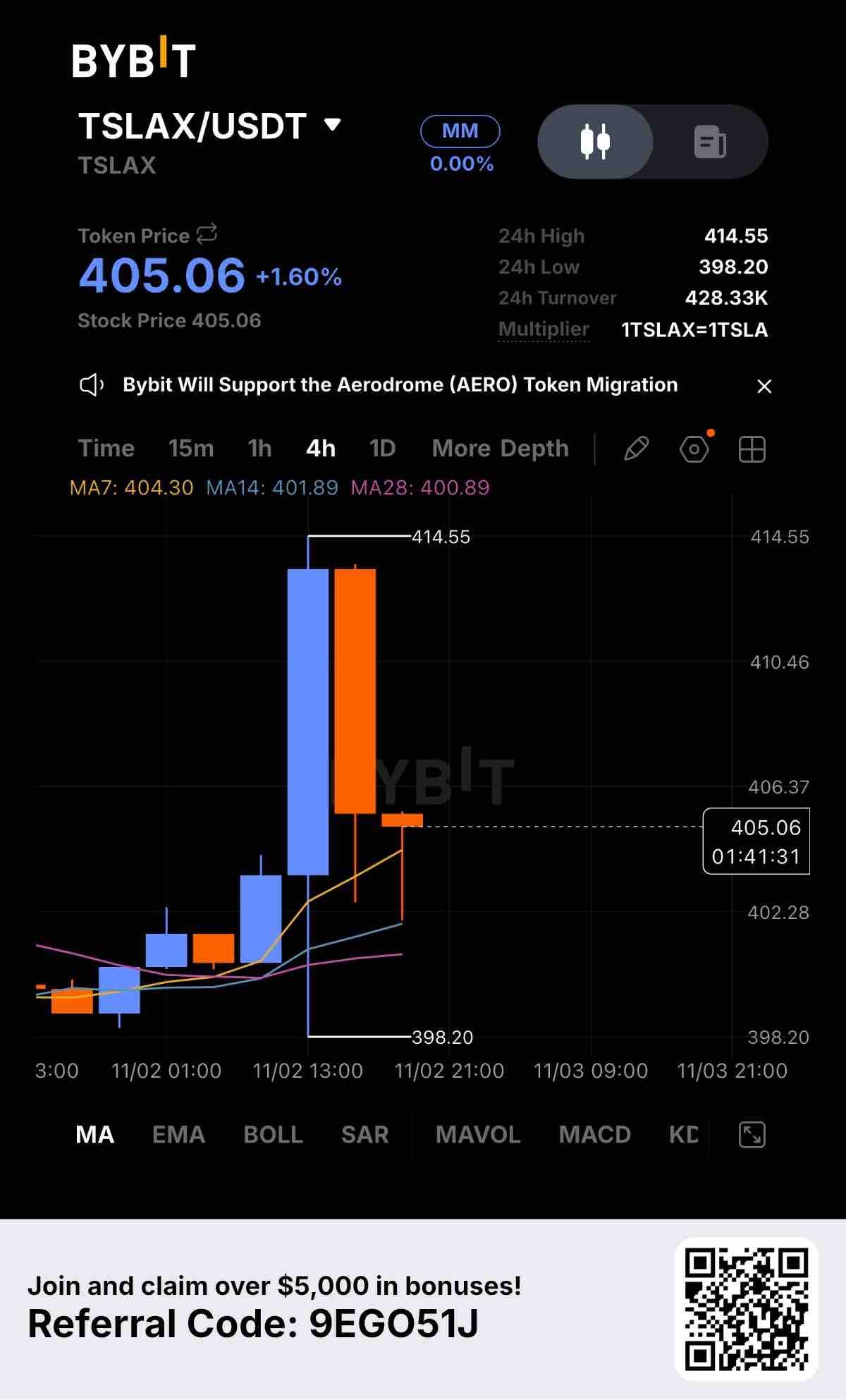
⚡ $TSLAX— TESLA is entering the blockchain economy without leaving the stock market. 👇👇 What if owning exposure to one of the world’s most recognizable technology companies no longer required going through a traditional brokerage account? That’s the opportunity behind Tesla xStock. TSLAX is a tokenized representation of Tesla shares, issued through Backed. Each token is designed to be backed 1:1 by the underlying Tesla stock, bringing traditional equity exposure onto blockchain networks. 🌐 THE BIGGER STORY IS TOKENIZED EQUITIES TSLAX combines two financial worlds: → Tesla’s exposure to electric vehicles, AI and robotics. → Blockchain’s accessibility, fractional ownership and transferability. → Potential integration with decentralized finance. → Trading opportunities beyond traditional stock-market hours. 💰 WHY TSLAX MATTERS The interesting part isn’t simply tracking Tesla’s share price. It’s making traditional financial assets more accessible within crypto infrastructure. Recent market data shows TSLAX around $403, with a 7-day gain of approximately 5.7%. Its market capitalization is around $74 million. ⚠️ THE RISK TSLAX still follows Tesla’s underlying stock performance. It doesn’t eliminate equity-market volatility, and token holders shouldn’t automatically assume they receive the same shareholder rights as direct TSLA investors. 🔥 MY TAKE I see TSLAX as part of a much bigger financial transformation. Crypto doesn’t necessarily need to replace traditional markets to become more important. It can bring those markets onto blockchain infrastructure. The next phase of crypto adoption might not be about creating more digital currencies. It could be about making almost every major financial asset accessible on-chain. 🚀 #ByXIMPACT #IMPACTbyTrade $TSLAXUSDT
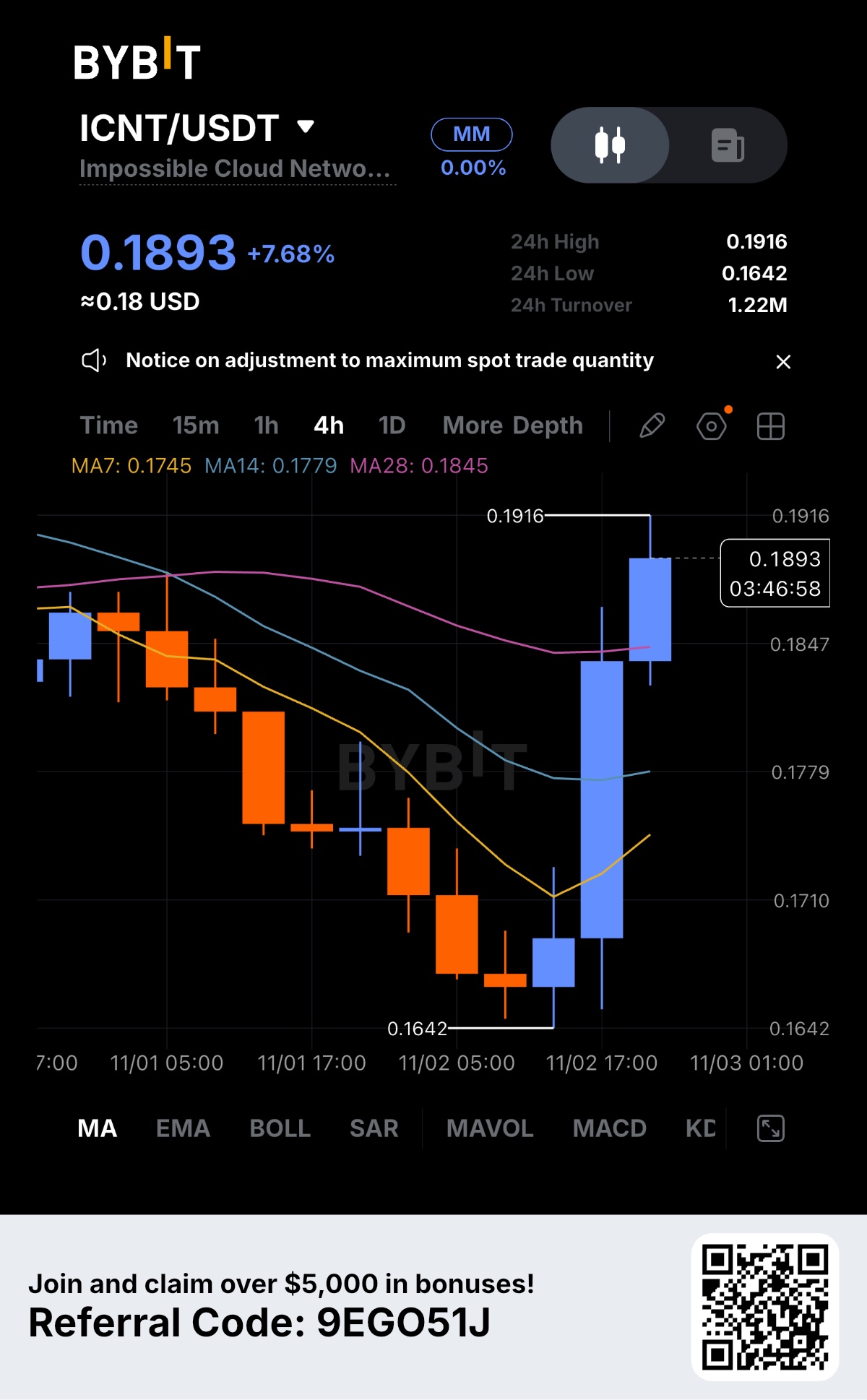
☁️ $ICNT— THE CLOUD industry had a decentralization problem, And impossible cloud wants to challenge it.👇👇👇 Most people associate DePIN with decentralized storage, but the bigger opportunity could be competing with the centralized infrastructure powering the internet. That’s where Impossible Cloud Network becomes interesting. ICN is building decentralized enterprise-grade cloud infrastructure, combining storage, computing and networking. Its ambition is to offer businesses an alternative to relying entirely on traditional cloud providers. ⚙️ THE REAL NARRATIVE IS ENTERPRISE ADOPTION AI, Web3 and enterprise applications all need reliable computing resources. ICN is attempting to connect independent hardware providers with businesses that need these services. Its enterprise-focused approach gives it a different angle from projects built primarily around retail crypto adoption. 💰 WHY ICNT MATTERS ICNT isn’t simply a governance token. → Access to network storage and computing. → Collateral for hardware providers. → Staking and network security. → Incentives for infrastructure participants. This creates a potential connection between real infrastructure demand and token utility. 📈 THE MARKET SIGNAL ICNT is trading around $0.166, down approximately 9% over 24 hours in the latest market snapshot. Interestingly, its 30-day performance remains positive, suggesting that the recent weakness follows a substantial recovery. But there’s an important supply concern: approximately 19.46 million ICNT tokens are scheduled to unlock on November 3, 2026. That’s roughly 2.8% of maximum supply. ⚠️ THE BIGGEST CHALLENGE ICN must prove that businesses will consistently pay for its infrastructure and that growing usage creates meaningful ICNT demand. Competition from established cloud providers is another major obstacle. 🔥 MY TAKE ICNT interests me because it targets a market that exists outside crypto speculation. Cloud computing is already essential to the global economy. The opportunity is making that infrastructure more open, distributed and accessible. If Impossible Cloud can turn enterprise demand into sustainable network activity, ICNT could become more than another DePIN token. It could represent exposure to the decentralization of cloud infrastructure. 🚀 $ICNTUSDT #BybitStocks #IMPACTbyTrade
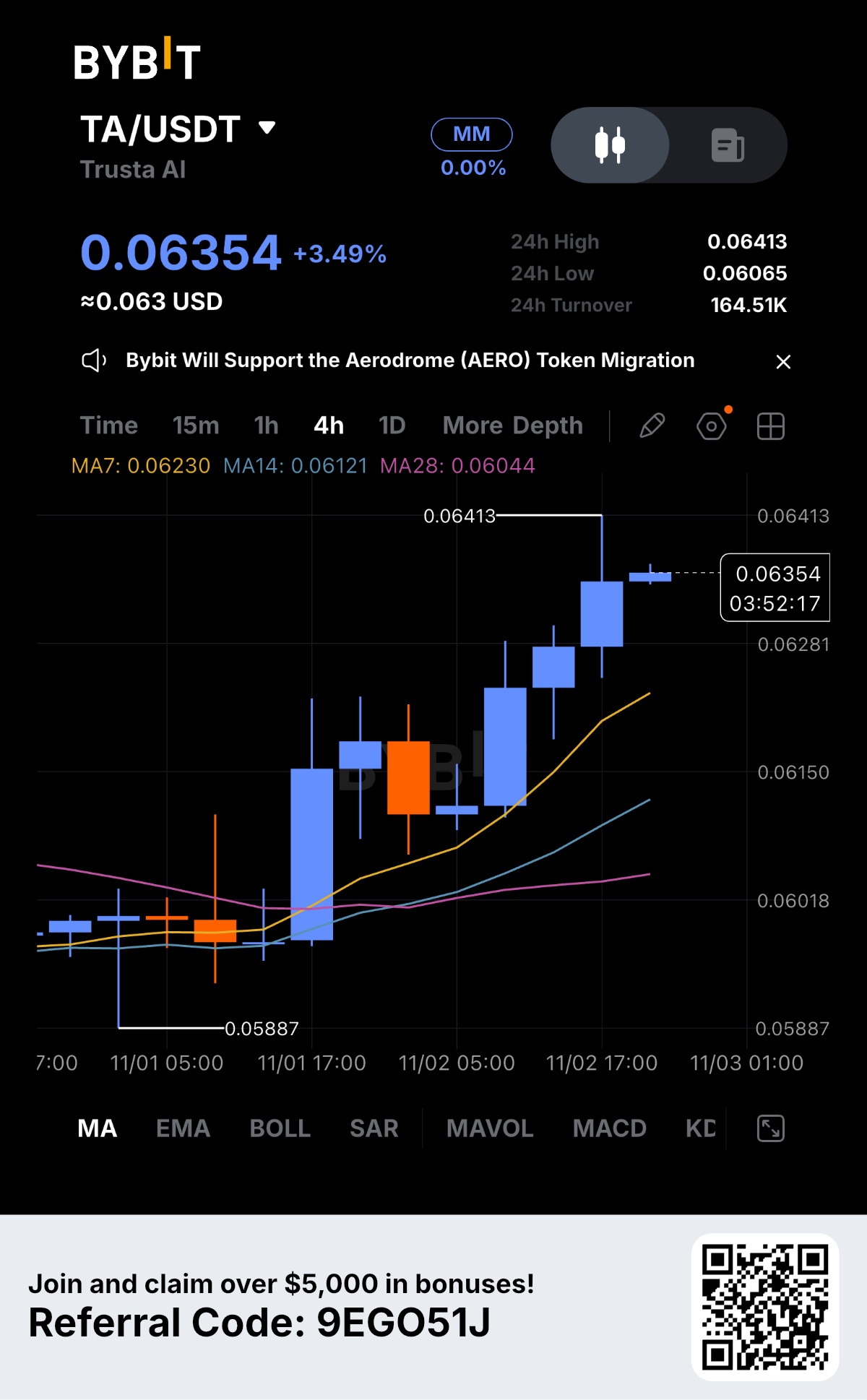
🟢 $TAUSDT — TRUST is becomin An important piece of the AI Economy .👇👇👇 AI is developing rapidly, but there’s a problem the market doesn’t discuss enough: how do we know whether an AI agent, wallet or digital identity is actually trustworthy? That’s the opportunity behind Trusta.AI. 🧠 THE NARRATIVE IS BIGGER THAN AI Trusta is building identity and reputation infrastructure for both humans and AI agents. Its technology focuses on on-chain identity verification, reputation scoring and protection against Sybil attacks. As autonomous AI agents become more active in crypto, identifying legitimate participants could become increasingly valuable. 💰 WHERE TA GETS ITS VALUE The token has several intended economic roles: → Payments for identity and attestation services. → Staking for network participants. → Governance. → Potential gas utility for future mainnet operations. The interesting part is that Trusta is addressing a problem that could grow alongside AI adoption. 📊 THE MARKET SETUP TA is trading around $0.06 in the latest available snapshot, with its market activity showing increased derivatives participation. However, approximately 24.1 million TA tokens are scheduled to unlock on November 21, representing another supply event traders should monitor. ⚠️ THE BIGGEST CHALLENGE A promising AI identity narrative doesn’t automatically translate into token demand. Trusta still needs to demonstrate sustained adoption, meaningful revenue and stronger utility. 🔥 MY TAKE TA is interesting because it targets something the next generation of crypto applications may desperately need: verifiable trust. If AI agents become a major part of the blockchain economy, identity and reputation infrastructure could become essential. The bigger opportunity isn’t simply building smarter AI. It’s building a system that makes intelligent agents trustworthy enough to participate in the digital economy. 🚀 $TAUSDT #IMPACTbyTrade #BybitStocks
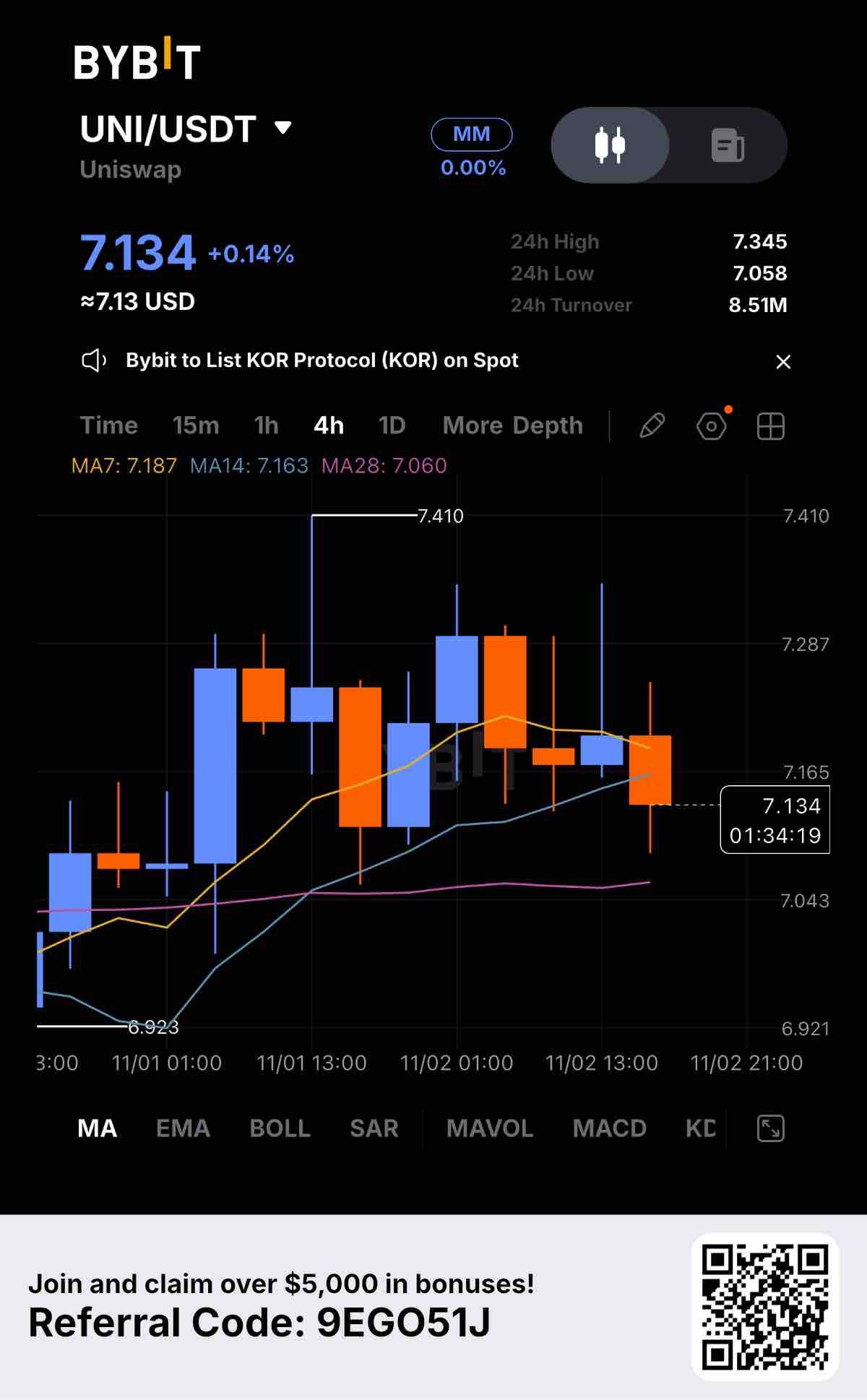
🦄 UNI— UNISWAP is turning Defi activity into a token value story .👇👇👇 What if one of DeFi’s biggest opportunities isn’t attracting more traders, but finally making protocol growth matter to its own token? That’s what makes UNI interesting. Uniswap has evolved beyond a simple decentralized exchange. Its infrastructure now spans multiple chains, while Uniswap v4 introduces customizable liquidity pools through its Hooks architecture. 🔥 THE BIGGEST CHANGE IS TOKEN ECONOMICS The December 2025 UNIfication upgrade changed UNI’s investment thesis. Protocol fees are now connected to a mechanism that purchases and burns UNI. This creates a direct relationship between exchange activity and token supply reduction. ⚙️ THE NEXT EXPANSION Uniswap is continuing to develop its infrastructure. Recent October 2026 releases include Aggregator Hooks, developer analytics and TJAR, which allows applications to collect fees in different assets and receive their preferred token. This could strengthen Uniswap’s position beyond ordinary token swapping. ⚠️ THE CHALLENGE Competition from other DEXs remains intense. More trading volume doesn’t automatically mean stronger UNI demand, and the burn mechanism must generate meaningful supply reduction to support the thesis. 🔥 MY TAKE UNI is becoming an interesting DeFi infrastructure bet because its story is shifting from governance alone toward measurable economic activity. If Uniswap continues attracting liquidity, expanding across chains and increasing protocol fees, the token could benefit from a stronger fundamental foundation. The real opportunity isn’t simply owning a piece of the biggest DEX. It’s owning a token whose supply can respond to the growth of the infrastructure behind it. 🚀 #ByXIMPACT #IMPACTbyTrade $UNIUSDT
₿ $BTC— The market is testing Bitcoin's Value as a monetary Asset.👇👇👇 Bitcoin’s biggest strength isn’t that it can rise faster than traditional investments. It’s that its monetary rules don’t change whenever economic conditions become uncomfortable. That distinction matters in the current market. Bitcoin is trading around $78,000 after falling to a six-week low. October also closed with a 7.3% decline, challenging the usual bullish expectations surrounding the month. 🏦 INSTITUTIONAL DEMAND IS CHANGING THE GAME Spot Bitcoin ETFs have become an important source of market demand. But institutional participation cuts both ways. On October 30, U.S. spot Bitcoin ETFs recorded approximately $643 million in outflows, showing how quickly sentiment can change when investors reduce risk. 🔑 THE SCARCITY THESIS REMAINS Bitcoin has a maximum supply of 21 million coins. No central authority can simply increase that limit to finance spending or respond to economic pressure. Its appeal comes from predictable issuance, decentralization and the ability to hold value outside traditional monetary systems. ⚠️ WHAT COULD HOLD BTC BACK? Tighter financial conditions, elevated inflation, institutional outflows and declining risk appetite remain important obstacles. The $80K–$82K region has also been identified as an important support zone by Coinbase Institutional. 🔥 MY TAKE Bitcoin is entering a phase where its maturity is being tested. The market has to decide whether institutional participation and monetary scarcity can support its valuation through difficult economic conditions. The real Bitcoin thesis isn’t about chasing the next rally. It’s about owning an asset whose supply cannot respond to the market’s emotions. ₿ #ByXIMPACT #IMPACTbyTrade $BTCUSDT
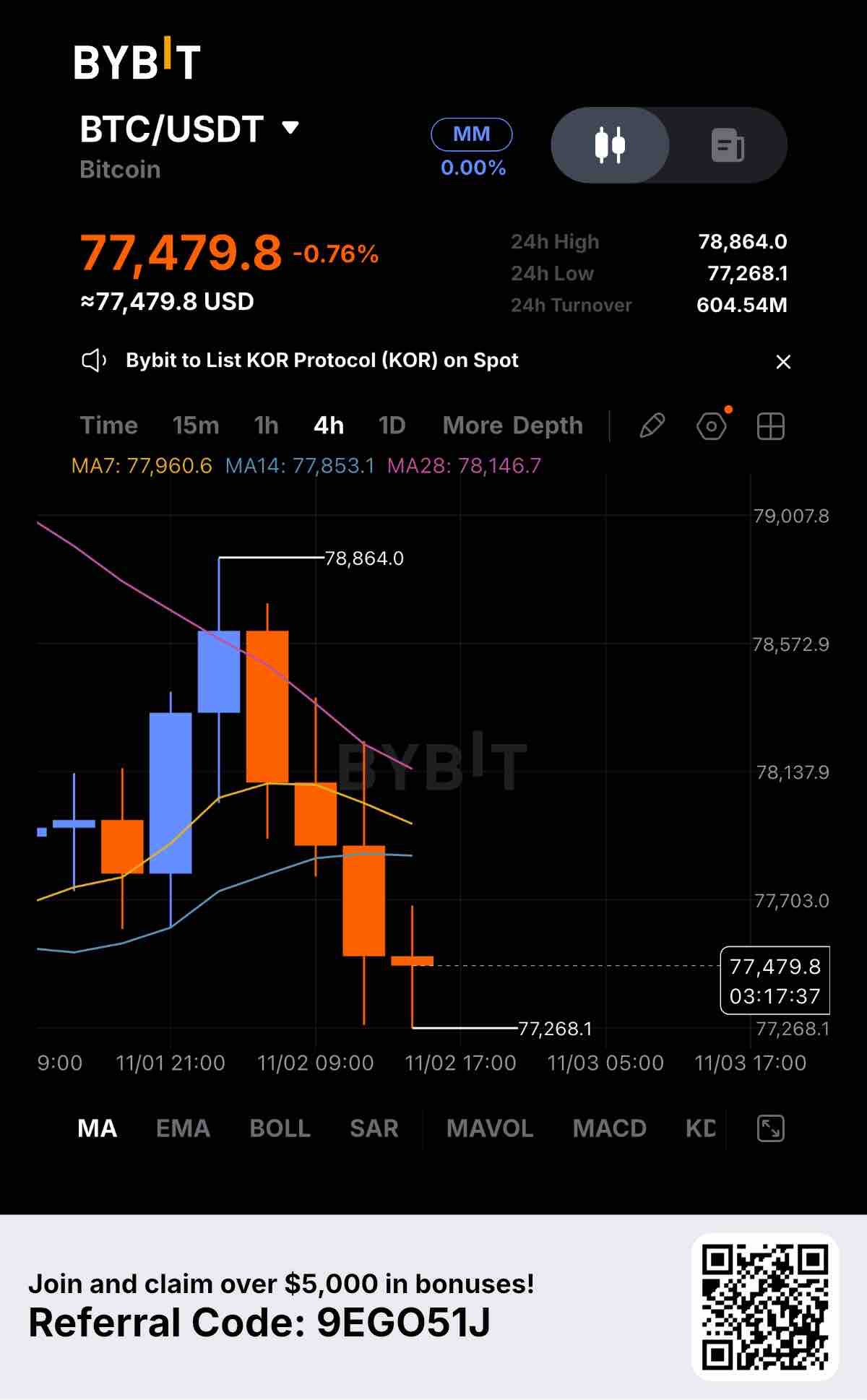
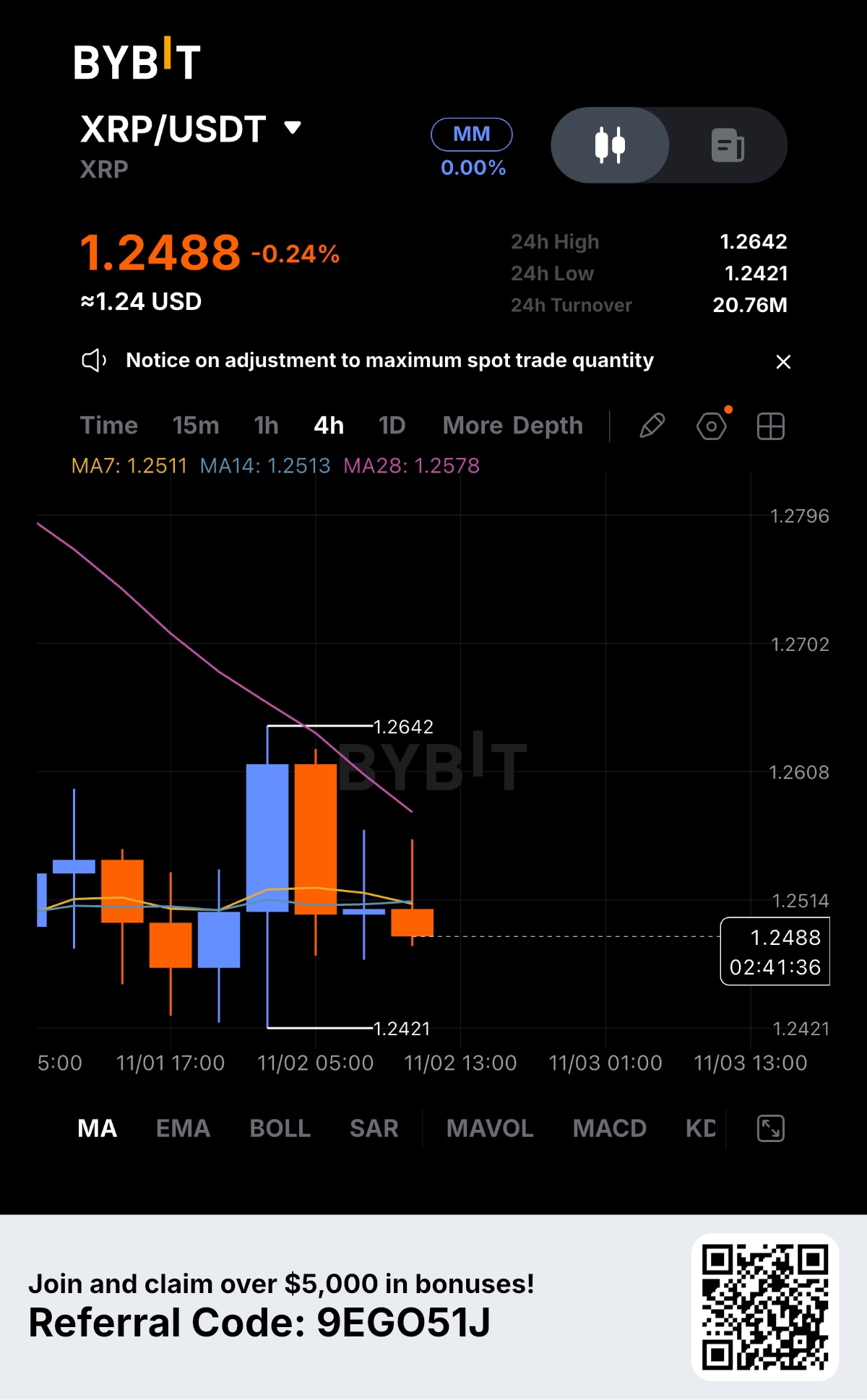
🔵$XRP__the real opportunity is much bigger than cross-border payments What if XRP’s biggest opportunity isn’t replacing traditional banking, but becoming part of the financial infrastructure banks use to move and manage money? That’s the direction worth watching. Ripple has been expanding beyond payment services into institutional custody, tokenization and financial infrastructure. Its October partnerships with Meritz Securities and DriveWealth show how much broader that ambition has become. 🏦 THE INSTITUTIONAL CONNECTION Ripple’s growing relationships with financial institutions could give the XRP ecosystem access to markets that were previously difficult for crypto projects to reach. But there’s an important distinction: Ripple’s business growth doesn’t automatically translate into XRP demand. The strongest opportunity comes when actual financial activity requires XRP as a bridge asset. 💰 WHERE THE TOKEN FITS XRP has a specific role within the XRP Ledger: → Bridge asset for cross-border liquidity. → Transaction fees on XRPL. → Settlement between different currencies. → Participation in the growing XRPL financial ecosystem. The important question is whether institutional adoption generates meaningful demand for the token itself. 📈 THE MARKET SIGNAL Institutional interest has also become visible through spot XRP ETFs. By September 2026, these products had attracted approximately $1.68 billion in cumulative net inflows. However, institutional interest hasn’t guaranteed consistent price appreciation. ⚠️ THE BIGGEST CHALLENGE Ripple can expand its business, RLUSD can grow, and XRPL can attract developers without necessarily creating proportional demand for XRP. That disconnect is something investors shouldn’t ignore. 🔥 MY TAKE XRP’s opportunity isn’t simply about becoming a faster payment alternative. It’s about becoming a bridge between traditional financial markets and blockchain-based settlement. If institutional adoption eventually translates into substantial XRP utilization, the investment thesis becomes considerably stronger. The real catalyst isn’t how many institutions partner with Ripple. It’s how much of their financial activity actually needs XRP. 🚀 $XRPUSDT #IMPACTbyTrade #BybitStocks
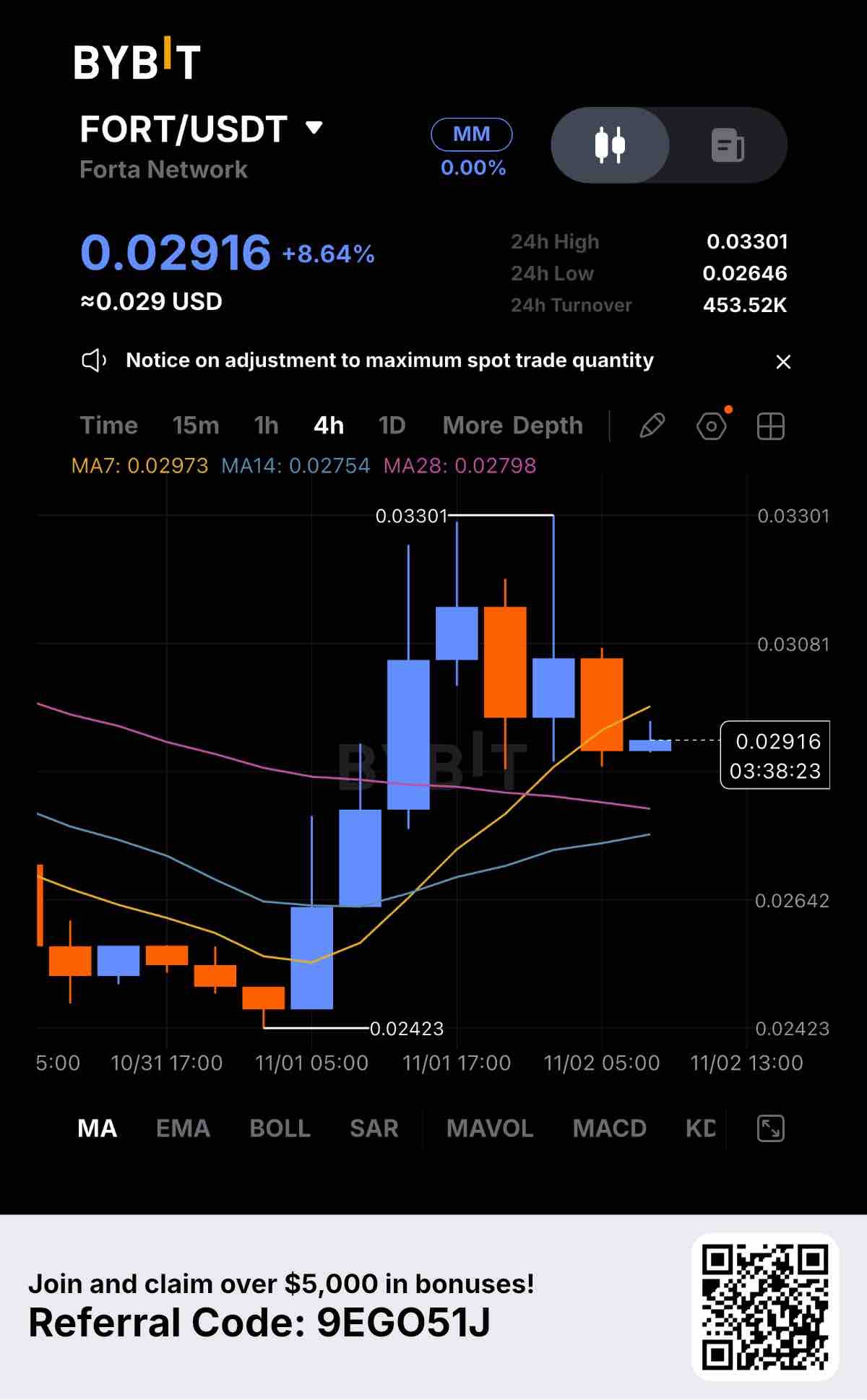
🔵$FORT— The next big security opportunity in crypto might be happening under the radar What happens when blockchain security moves from detecting attacks to preventing them before they happen? That’s the problem Forta is trying to solve. Forta is building decentralized security infrastructure that monitors blockchain activity, identifies suspicious transactions and helps protocols stop malicious activity before execution. Its Firewall product makes this particularly interesting. 🛡️ THE REAL NARRATIVE IS PREVENTION As DeFi, tokenized assets and blockchain applications expand, security becomes increasingly important. Forta is positioning itself as part of that infrastructure rather than another project competing for speculative attention. Its Firewall has also gained an important integration: Kraken’s Ink became its first adopter on OP Enterprise in August 2026. 💰 WHY FORT MATTERS FORT supports staking, network participation, fees and governance. There’s another interesting development: Firewall revenue flows into the Forta Treasury, where governance can decide whether to allocate funds toward token buybacks, liquidity or ecosystem incentives. 📈 THE MARKET IS WAKING UP FORT has recently experienced a strong move, gaining roughly 25% in 24 hours and trading around $0.031 in the latest available snapshot. Trading volume has also increased significantly. However, I wouldn’t automatically attribute the rally to one specific announcement. The next question is whether this momentum can attract sustained demand. ⚠️ THE BIGGEST CHALLENGE Forta still needs to demonstrate that growing security adoption can translate into sustainable revenue and stronger economic demand for FORT. Competition and token supply remain important considerations. 🔥 MY TAKE FORT interests me because blockchain security is not a temporary narrative. The more money, applications and institutions move on-chain, the greater the need for reliable protection. Forta is betting that preventing the next billion-dollar exploit could become just as valuable as building the next billion-dollar protocol. That’s the fundamental thesis worth watching. 🚀 #ByXIMPACT #IMPACTbyTrade $FORTUSDT
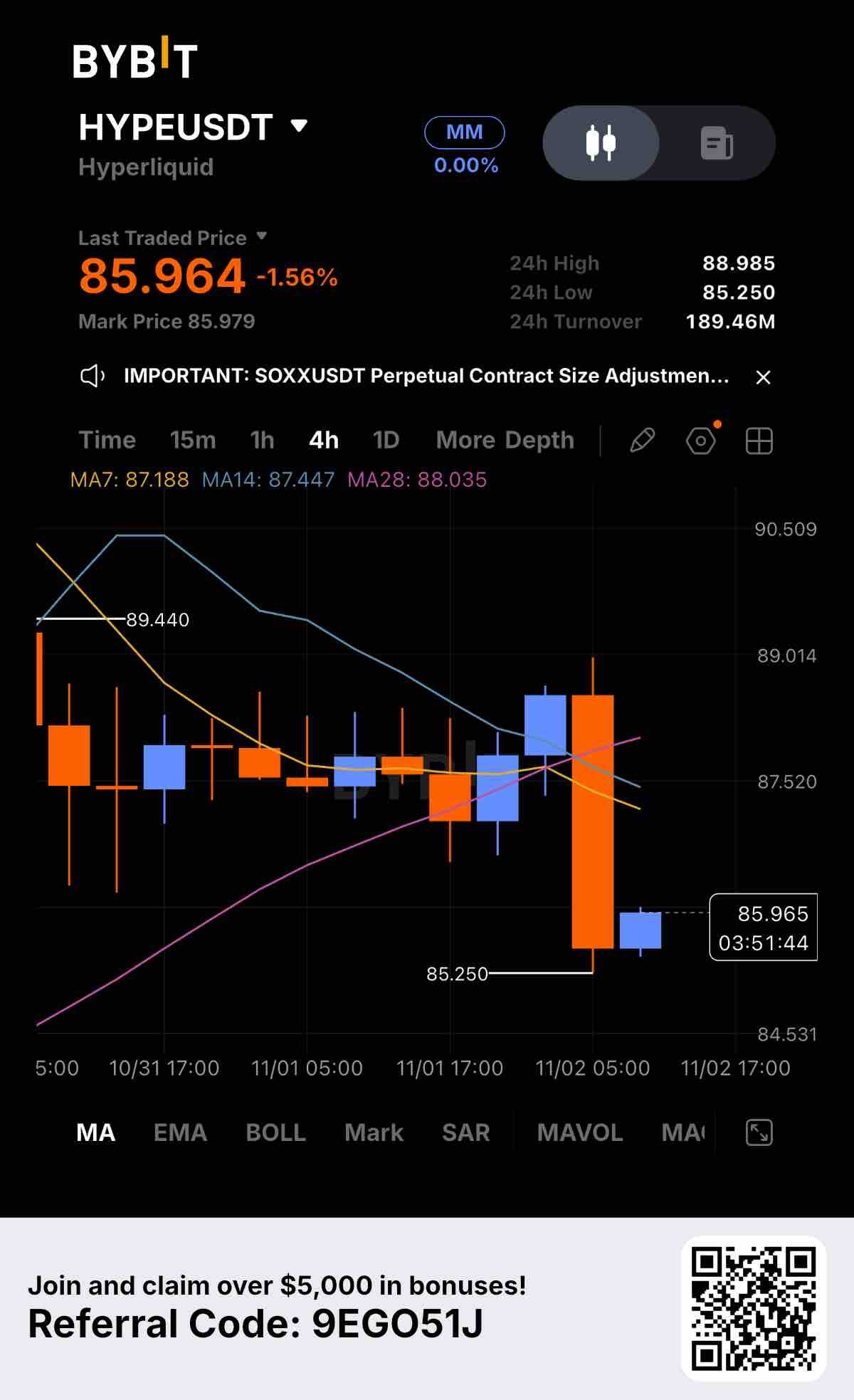
🔵$HYPE —wall street is starting to take decentralized market seriosly What if Hyperliquid’s biggest opportunity isn’t becoming the largest decentralized exchange, but becoming infrastructure for financial markets? That’s the direction that makes HYPE interesting. Hyperliquid has built an on-chain trading ecosystem around perpetual futures, order books and HyperEVM. Its HIP-3 framework also allows developers to introduce new markets beyond traditional crypto assets. 🏦 The Bigger Development The ICE partnership brings another dimension to the story. The parent company of the NYSE has announced plans involving Hyperliquid-based perpetual futures infrastructure, potentially connecting decentralized markets with traditional finance. 💰 Why HYPE Matters HYPE isn’t just an ecosystem badge. It supports staking, gas and governance, while the Assistance Fund mechanism connects protocol revenue with token purchases. That creates a potential relationship between platform activity and token demand. ⚠️ The Risk Competition is growing, regulatory approval remains important, and upcoming token unlocks could introduce selling pressure. Strong ecosystem growth doesn’t automatically guarantee price appreciation. 🔥 My Take Hyperliquid’s real opportunity is bigger than attracting more crypto traders. If it can establish itself as infrastructure for multiple financial markets, HYPE could represent exposure to a much broader shift in how trading operates. The question is whether Hyperliquid can turn its growing influence into lasting financial infrastructure. #IMPACTbyTrade #BybitStocks $HYPEUSDT
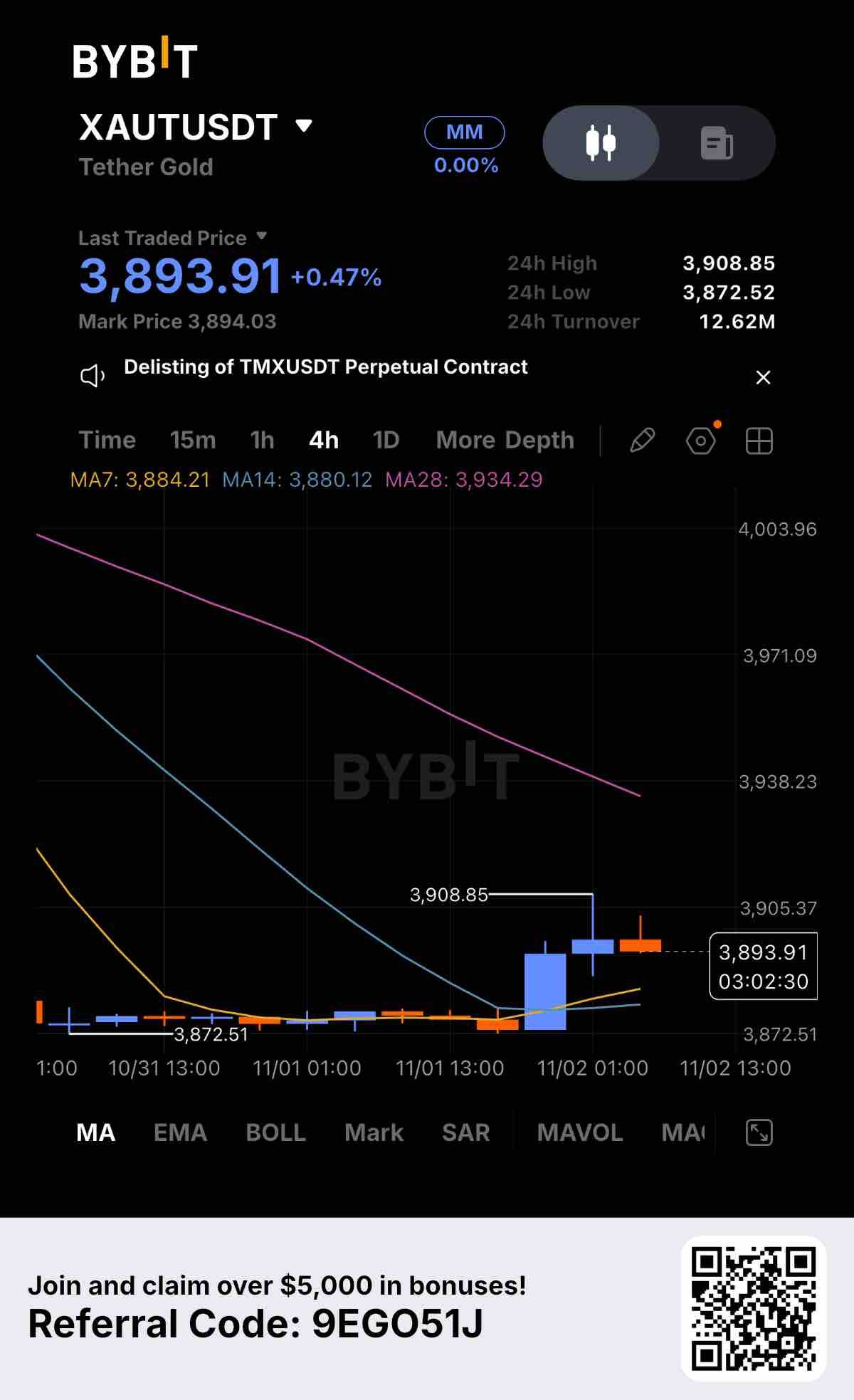
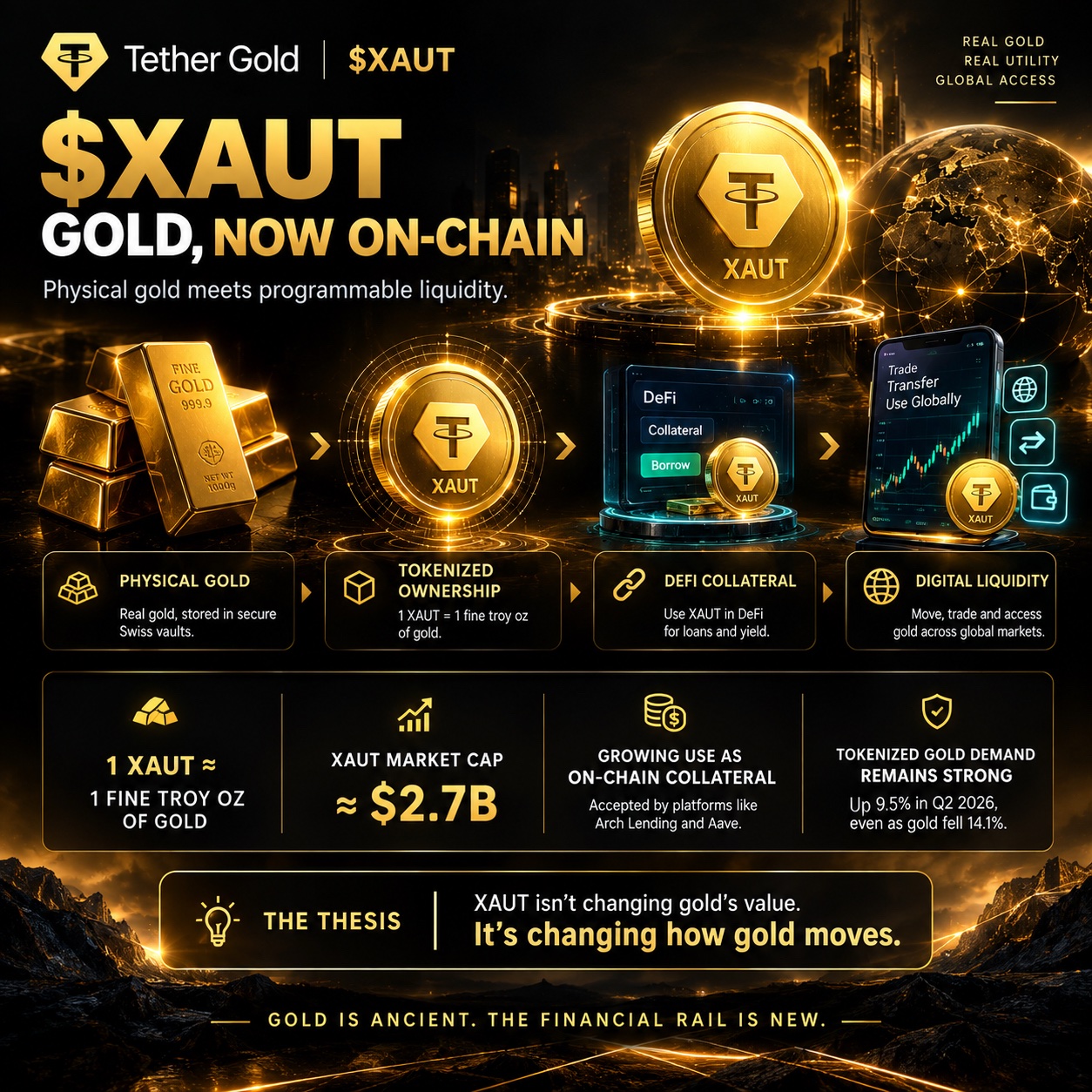
🟡 $XAUT — gold is entering a new financial Era And blockchain is part of the theory Most crypto assets need people to believe in their future value. XAUT approaches that question differently. Tether Gold connects digital ownership to something that has maintained monetary importance for thousands of years: physical gold. One XAUT represents ownership of one fine troy ounce of physical gold held in Swiss vaults. That gives it a fundamentally different position from the majority of tokens competing for speculative attention. But the interesting part isn’t simply that XAUT is backed by gold. It’s what happens when an ancient store of value meets modern financial infrastructure. 🏦 THE BIGGER OPPORTUNITY ISN’T JUST GOLD Gold has traditionally involved physical storage, transportation, custody and settlement challenges. XAUT attempts to remove some of those barriers. Through blockchain infrastructure, gold ownership becomes transferable digitally, accessible across borders and usable within crypto markets. This opens an interesting possibility: Gold doesn’t necessarily need to leave traditional finance to become part of the digital economy. It can retain its physical backing while gaining the flexibility of blockchain-based ownership. 🌍 ADOPTION IS STARTING TO TELL A BIGGER STORY There are two developments worth watching. First, Tether invested $150 million in Gold.com in February 2026, acquiring approximately 12% ownership and establishing a collaboration to expand access to physical and tokenized gold. Second, XAUT received Shariah compliance certification in July 2026, potentially opening additional opportunities across Islamic finance markets. These developments matter because they move XAUT beyond the usual crypto-native audience. It’s no longer just about attracting people who already understand blockchain. It’s about connecting digital assets with established financial and gold markets. 💰 THE NUMBERS BEHIND THE THESIS Tether reported that by the end of Q2 2026: → Physical gold reserves reached approximately 22.01 tonnes. → Customer holdings increased 9.5% during the quarter. → More than 53,225 additional XAUT moved into customer holdings. → Total market value reached approximately $2.837 billion. Interestingly, customer holdings increased even while gold experienced a 14.1% quarterly correction. That suggests demand for tokenized gold isn’t necessarily dependent on rising gold prices. Some investors may be using weakness to accumulate the underlying asset. ⚖️ UNDERSTANDING WHERE XAUT CAPTURES VALUE Unlike infrastructure tokens, XAUT doesn’t need a growing DeFi ecosystem or transaction fees to justify its underlying value. Its economic foundation is physical gold. That distinction is important. If gold appreciates, XAUT generally benefits from that movement. If gold declines, XAUT faces the same underlying price pressure. Its advantage is not creating an entirely new monetary asset. It’s making an existing one easier to access and transfer. 👀 WHAT COULD PUSH THE NEXT GROWTH PHASE? I’d pay attention to three things: → Expansion into traditional gold distribution channels. → Institutional adoption of tokenized commodities. → Growth in demand for blockchain-based ownership of physical assets. The bigger opportunity is the potential convergence of traditional commodities and digital financial markets. ⚠️ THE RISK PEOPLE SHOULDN’T IGNORE XAUT isn’t independent of gold’s market direction. It also carries issuer, custody, redemption, liquidity and regulatory risks. And unlike many crypto investments, holding XAUT doesn’t automatically provide staking rewards or generate protocol income. Its value proposition depends on the reliability of its physical backing and the market price of gold. 🔥 MY TAKE I see XAUT as something bigger than another gold-themed crypto token. It represents a shift in how traditional assets can exist inside digital financial markets. Bitcoin introduced a different way to think about monetary ownership. XAUT is taking an established form of wealth and making it digitally transferable. The real question isn’t whether gold will suddenly become relevant again. It’s whether tokenized gold can become a meaningful part of how the world owns, moves and uses wealth. Because the next major opportunity in crypto might not come from inventing another digital asset. It might come from bringing the world’s existing assets onto the blockchain. 🚀 #IMPACTbyTrade #WSOT2026 $XAUTUSDT
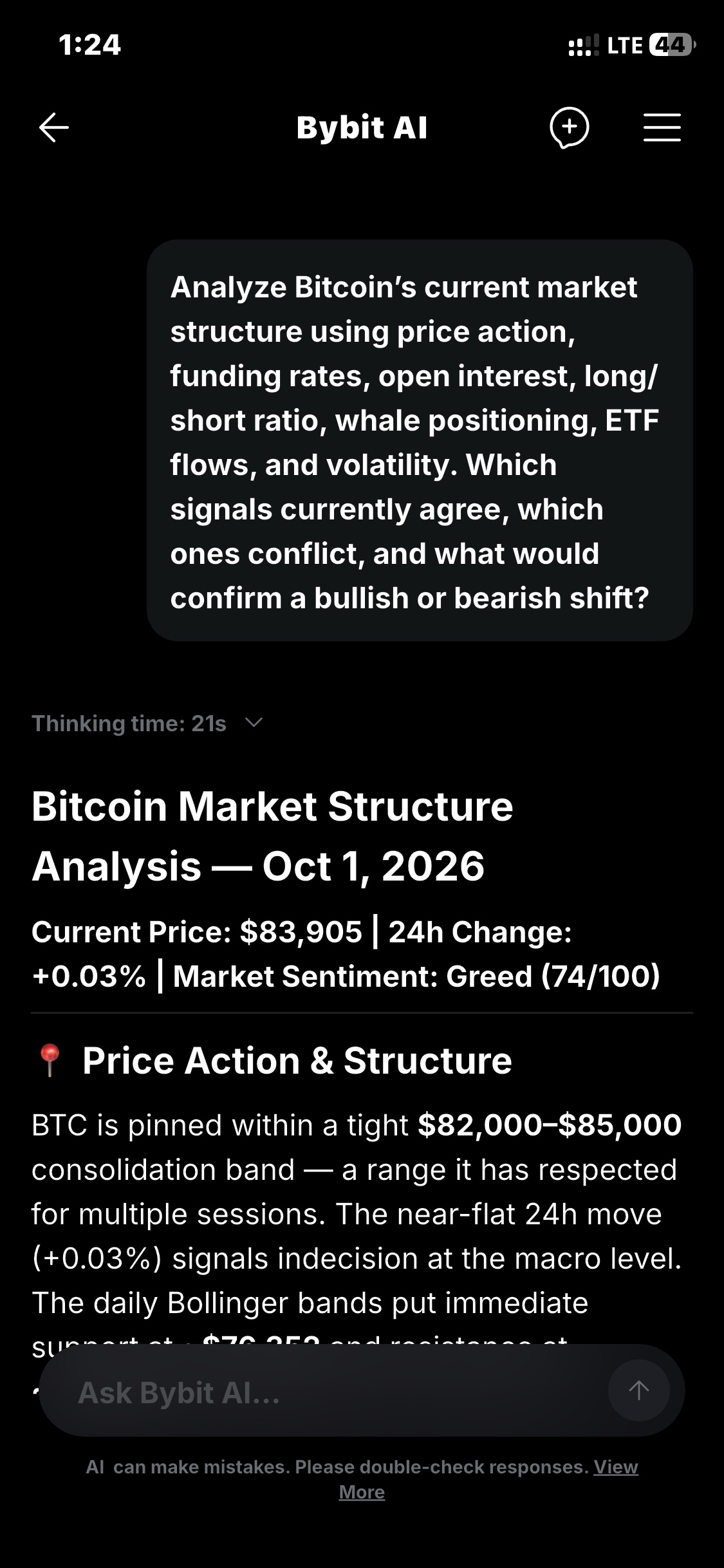
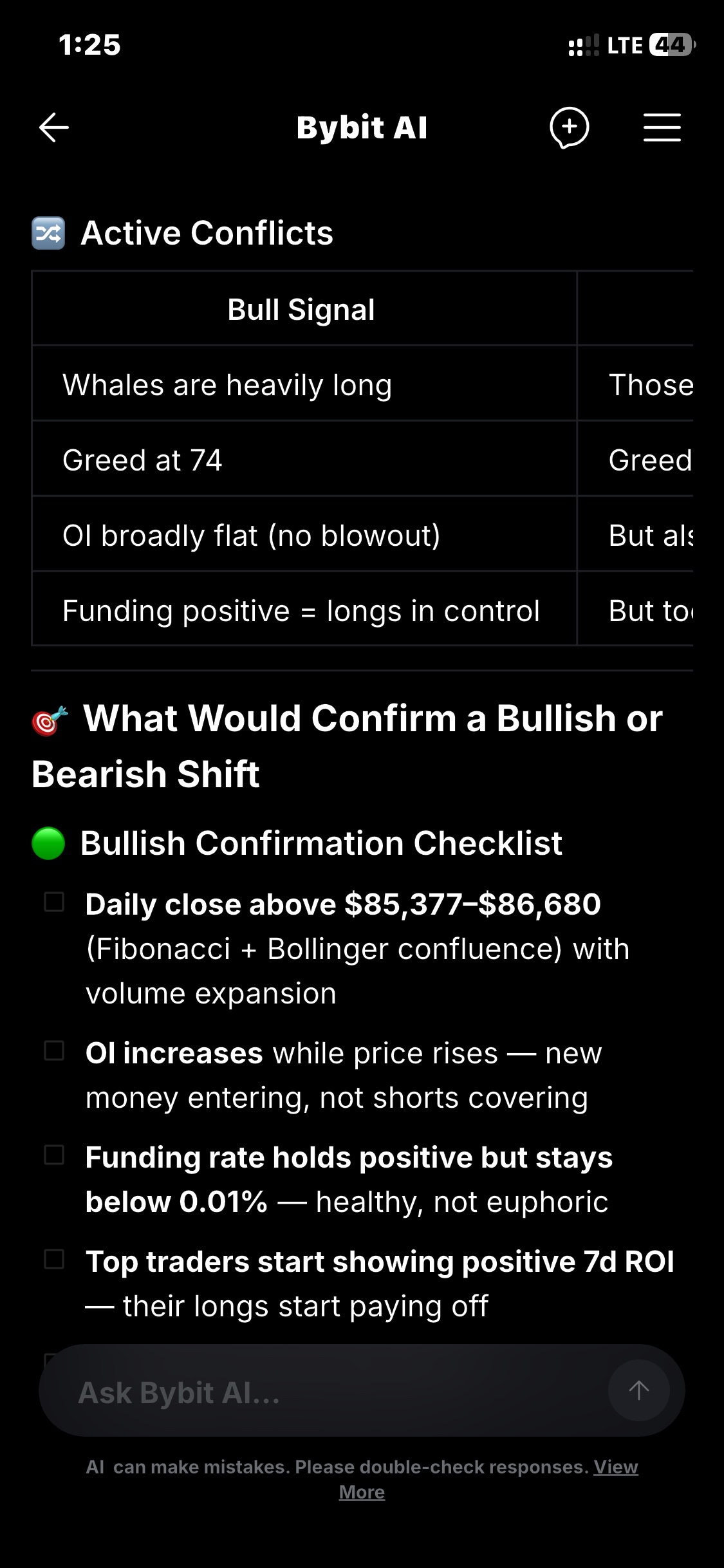
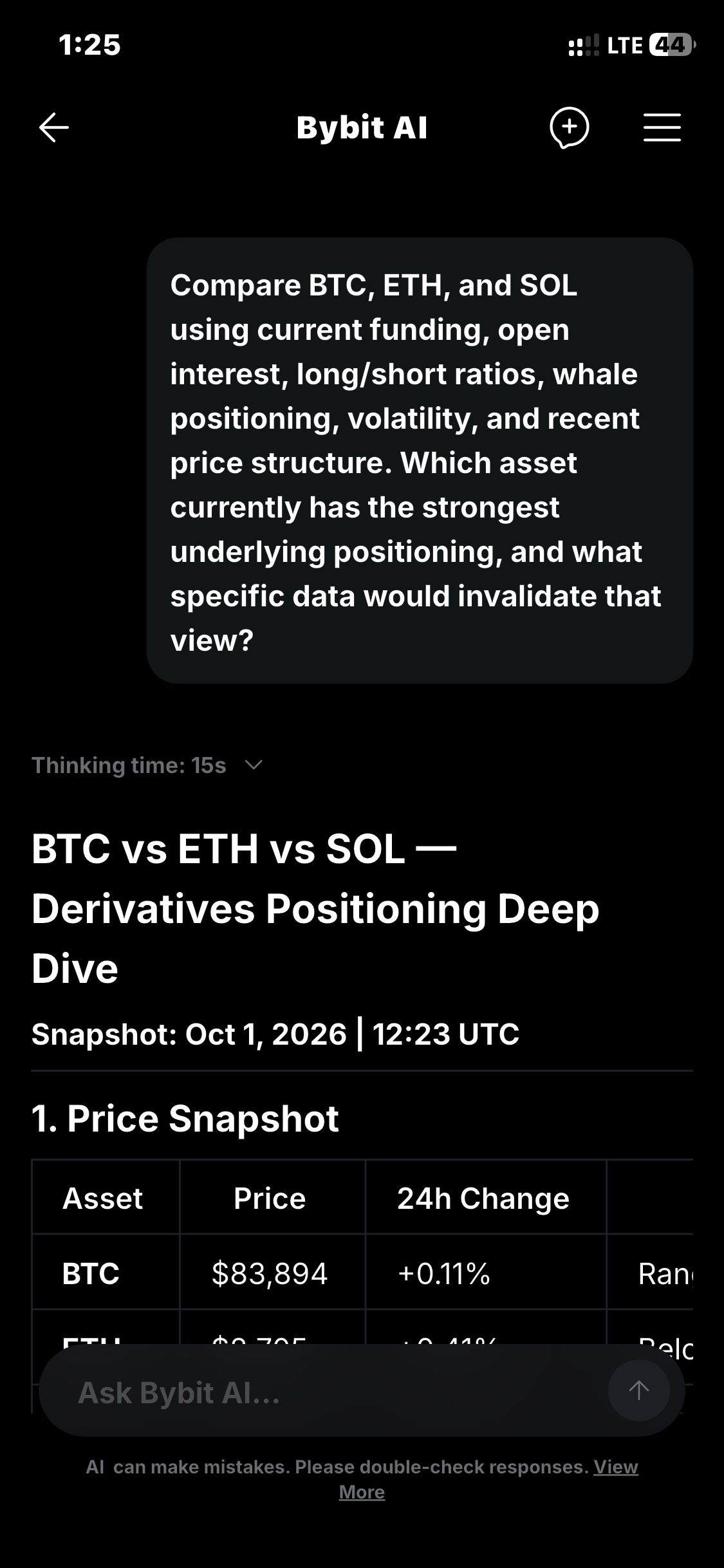
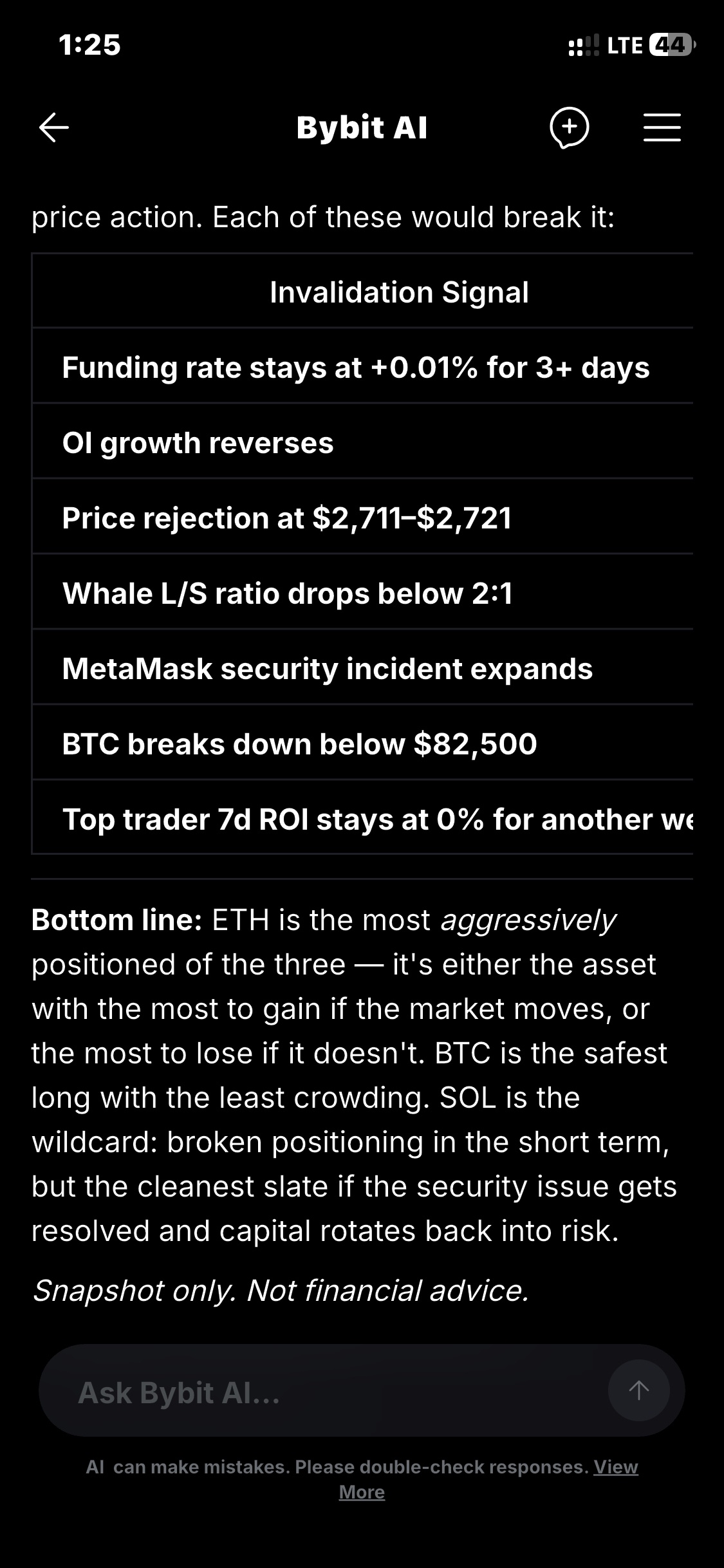
Feedback for Question 1 Feedback: Very detailed analysis. I liked how it connected price structure, whale positioning, funding, and OI instead of looking at one signal alone. The confirmation and invalidation levels made the analysis much more actionable.” Feedback for Question 2 Feedback: “Strong comparison across BTC, ETH, and SOL. The whale positioning and long/short data made the differences between the three assets clear, while the invalidation signals added useful context to the conclusion. For your event: use the screenshots showing the question + Bybit AI answer. The strongest ones are the sections with the data tables, active conflicts, and confirmation/invalidation points. #BybitAIBestReplies #ByPickMakeYourPickCount #PolyMarketPreIPO
🟡 $XAUT — GOLD IS STARTING TO BE USED LIKE FINANCIAL INFRASTRUCTURE What if gold’s biggest limitation was never its value… but the fact that you couldn’t really do much with it once you owned it? A gold bar can preserve wealth for centuries. But moving it, lending against it, using it as collateral, or settling it across borders is still tied to traditional financial infrastructure. That is where XAUT becomes interesting. Tether Gold represents ownership of physical gold on-chain, with each XAUT corresponding to one fine troy ounce of gold held in Swiss custody. By Q1 2026, Tether reported more than 707,747 ounces backing XAUT. But the more important development isn’t simply that gold has been tokenized. It is what people are beginning to do with the token. Aave has seen substantial borrowing demand against XAUT, with its isolated debt ceiling repeatedly reaching capacity. And in September, Arch Lending added XAUT as collateral for crypto-backed loans, initially allowing loan-to-value ratios of up to 75%. So the model starts looking different: Physical gold → XAUT → on-chain collateral → borrowing → liquidity. Gold isn’t just sitting inside a vault anymore. It’s becoming something that can participate in digital financial markets. And XAUT’s reach is expanding beyond crypto-native users too. Tether received Shariah compliance certification for XAUT in July, opening a potential pathway toward Islamic finance users and institutions. Tether has also partnered with Gold.com to expand distribution between physical and digital gold markets. That creates a much bigger question. What happens when one of humanity’s oldest stores of value becomes programmable? The obvious narrative is: “XAUT is just digital gold.” Technically, yes. But that may be underselling what tokenization changes. The interesting part isn’t creating another way to hold gold. It’s making gold portable, transferable and usable as collateral inside programmable financial systems. But here’s the part that still needs to prove itself: Can tokenized gold become deeply integrated into global finance, rather than remaining a niche crypto product? Because putting gold on a blockchain doesn’t automatically create liquidity, adoption or utility. The infrastructure around it has to grow too. That’s why I wouldn’t frame XAUT simply as: “Gold on the blockchain.” I’d frame it differently: XAUT is testing whether gold can evolve from a passive store of wealth into active digital collateral. If that transition continues, the future of XAUT may not be about replacing physical gold. It may be about giving one of the world’s oldest assets a new financial life. 🟡$XAUTUSDT #ByXIMPACT #BybitAIBestReplies #TradFiOptions24/7
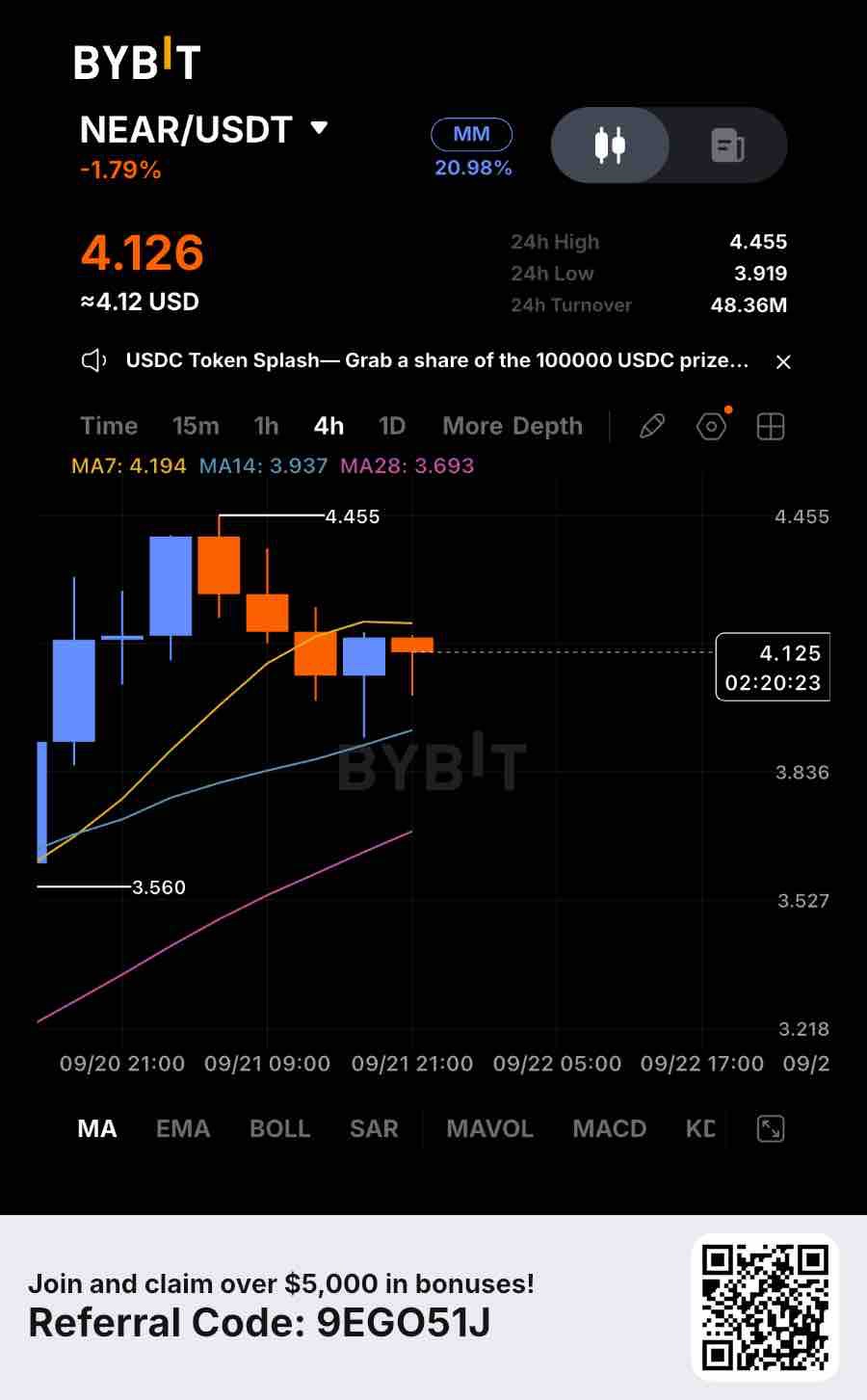
🟣 $NEAR — WHAT IF THE BLOCKCHAIN ISN’T SUPPOSED TO BE THE PRODUCT? What if the next major crypto user never needs to know which blockchain they are using? That is the direction NEAR is quietly pushing toward. Instead of asking users to understand bridges, networks, gas tokens and wallet switching, NEAR is building around Intents + Chain Abstraction + AI agents — where the user describes the outcome they want, while the infrastructure handles the complicated execution underneath. And NEAR Intents is already becoming more than a concept. The protocol currently reports $29B+ in all-time volume across 35 chains, allowing users and applications to access cross-chain liquidity without manually managing bridges or gas across each network. So the model becomes surprisingly simple: User defines the goal → Intents finds the route → liquidity comes from multiple chains → execution happens underneath. But then NEAR adds another layer. AI agents. NEAR’s 2026 roadmap combines cross-chain financial infrastructure with autonomous agents capable of executing economic activity on behalf of users. That changes the thesis. Because an AI agent doesn’t want to think: “Am I on Ethereum?” “Where is my gas?” “Which bridge should I use?” It wants: “Get this asset. Move this money. Rebalance this portfolio. Complete this transaction.” NEAR is trying to build the infrastructure underneath that experience. But here’s the part that actually matters: Can NEAR turn abstraction into economic activity? Making crypto easier doesn’t automatically make NEAR valuable. The infrastructure still needs users, liquidity, applications and agents actually using it. And NEAR is now changing its own economics too: a governance-approved proposal is moving toward removing the developer gas rebate, which would direct 100% of execution gas fees toward protocol-level burning once deployed on mainnet. That’s why I wouldn’t frame NEAR simply as: “An AI blockchain.” That’s too small. I’d frame it differently: NEAR is trying to make the blockchain disappear behind the user’s intention. If that works, the winning experience may no longer be: “I know which chain I’m using.” It may simply be: “I told the machine what I wanted — and it made it happen.” And NEAR is betting that the future of crypto belongs to the infrastructure that makes that possible. 🟣$NEARUSDT $SPCXXUSDT #ByXIMPACT #BybitAIBoughtTheDip #BybitOdds
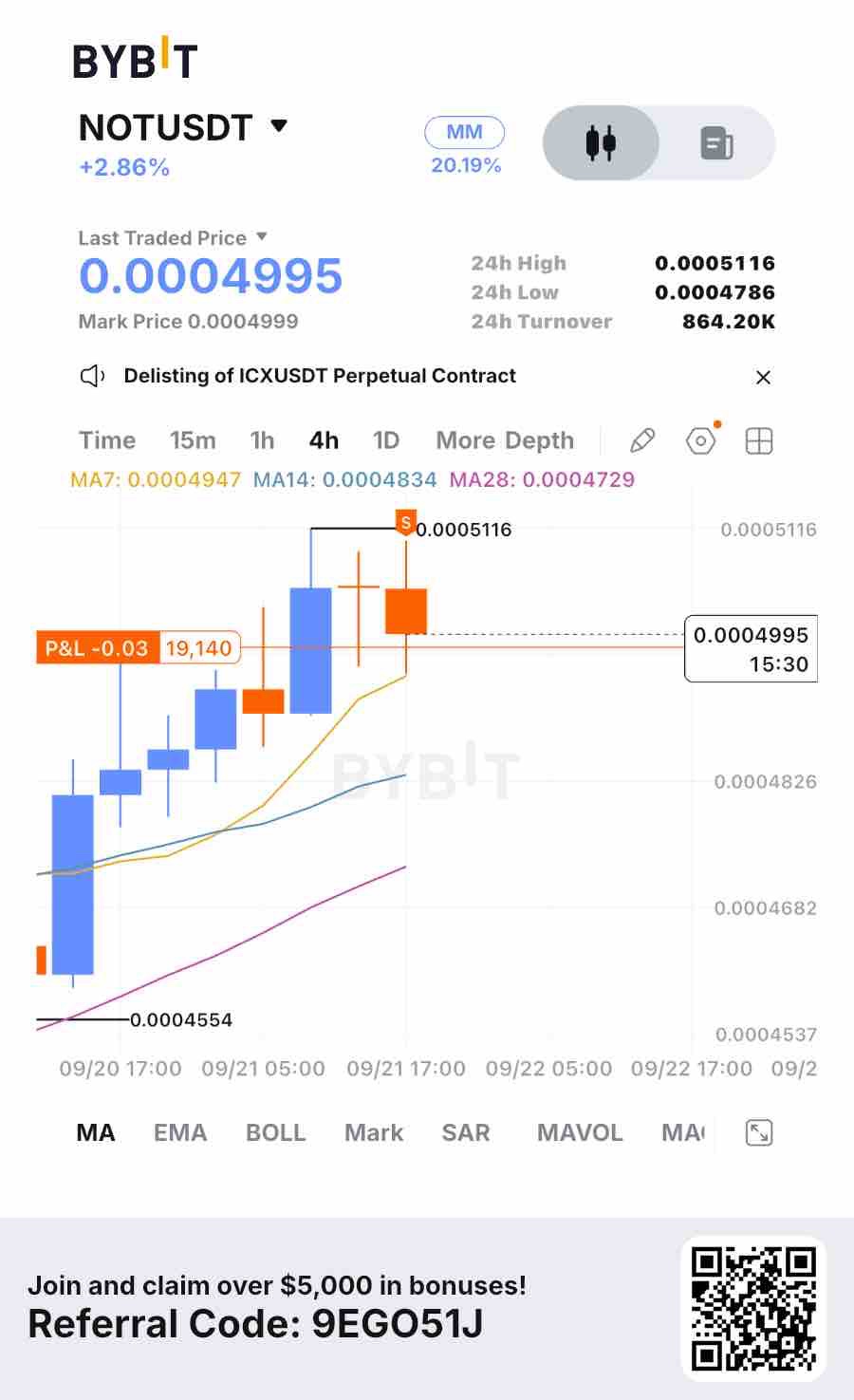
🟡 $NOT — NOTCOIN’S REAL PRODUCT MAY BE THE AUDIENCE What if Notcoin’s most valuable asset was never the token? What if it was the people? That is the part of Notcoin that gets overlooked. The original clicker game brought roughly 35 million users into the ecosystem, with around 2.8 million on-chain holders. But Notcoin didn’t stop at the game. Its ecosystem now includes games such as Not Pixel and Lost Dogs, while Notcoin Explore has been used to connect users with new Web3 projects. And the numbers behind Explore are interesting. Notcoin says users have earned more than $4.5M from exploring projects, with more than $7M earned across partner campaigns. Its community channel has also reported 200+ projects launched through Explore and more than 22.5M users participating in those launches. So the model starts looking different: Millions of users → discover a project → interact with it → projects gain distribution → users receive incentives. That is no longer simply a game. It starts looking like a distribution layer for Web3 inside Telegram. And that changes the question around NOT. The obvious narrative is: “Notcoin was a massive tap-to-earn game.” True. But that’s the history. The more interesting experiment is whether Notcoin can turn the attention generated by that game into a repeatable ecosystem for discovering and launching new products. Because acquiring users is one problem. Knowing what to do with those users afterward is another. And Notcoin has already shown that its audience can be moved beyond the original clicker into games, campaigns and Web3 exploration. But here’s the part that matters: A huge audience does not automatically create huge token value. NOT currently has about 99.4B tokens circulating out of a 102.45B maximum supply, while the token remains dramatically below its 2024 all-time high. So the next chapter has to prove something the clicker never needed to prove: Can attention become sustainable economic activity? That’s why I wouldn’t frame NOT simply as another Telegram gaming token. I’d frame it differently: Notcoin is testing whether a massive Telegram-native audience can become an infrastructure for Web3 distribution. If that audience keeps discovering, playing, launching and interacting with new products, the tap-to-earn game could eventually look less like the product… …and more like the onboarding mechanism that built the network. 🟡$NOTUSDT $ETHUSDT #ByXIMPACT #MyBybitAIPromptPlaybook #FOMC

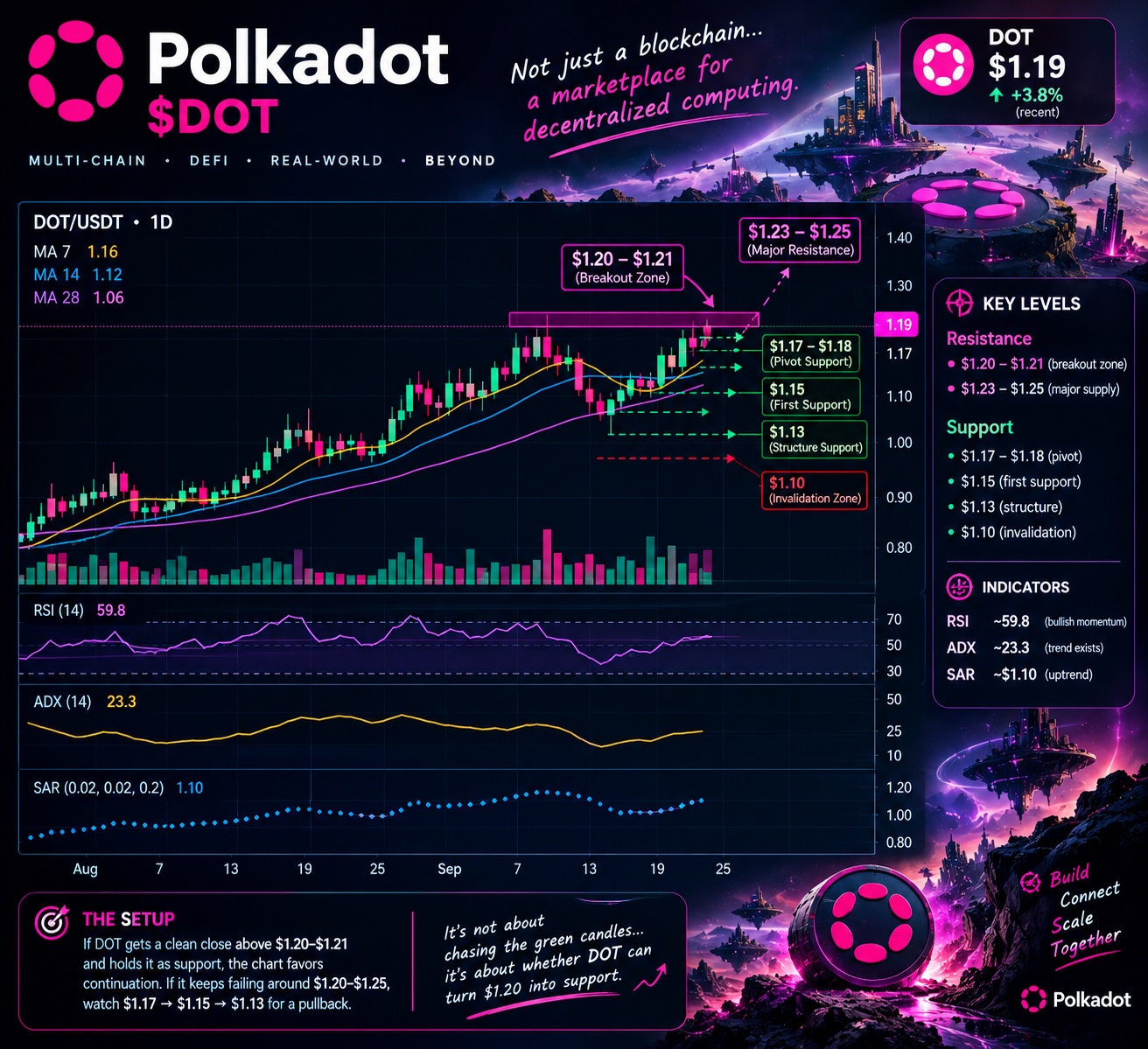
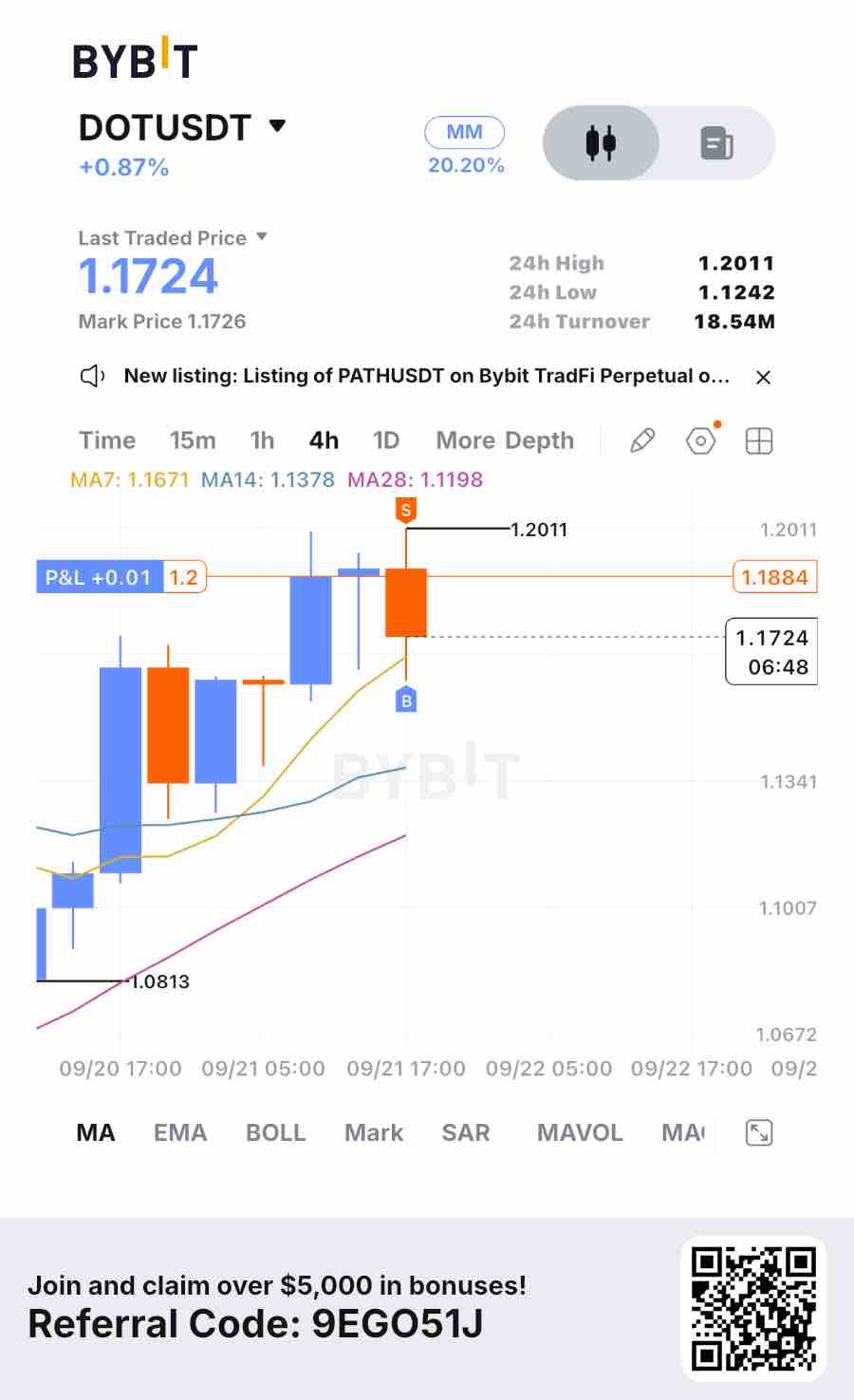
⚡ $DOT — POLKADOT IS QUIETLY TURNING BLOCKSPACE INTO A MARKET What if a blockchain didn’t sell transactions… but sold computing power itself? That is the part of Polkadot I think gets overlooked. Polkadot’s Agile Coretime turns network capacity into something developers can actually purchase — in bulk, on demand, split, resold and allocated according to demand. Coretime sales are also burned, creating a direct link between network resource demand and DOT’s supply. So the model becomes surprisingly simple: Developers need computation → they buy Coretime → DOT is used → Coretime revenue is burned. That’s a very different story from the old Polkadot narrative. And then there’s JAM. Polkadot’s long-term architecture is moving toward a more general decentralized computing system, while DOT remains the native asset for staking, governance and Coretime. Which gives DOT an unusual position: It isn’t only trying to be money. It isn’t only trying to secure a blockchain. It’s becoming the economic ticket for accessing decentralized computation. But here’s the part that decides whether this becomes meaningful: Does anyone actually want to buy the computation? Better infrastructure doesn’t automatically create demand. Coretime can be flexible, scalable and beautifully designed — but developers still need to build applications that generate enough activity to consume it. That’s why I wouldn’t make the DOT thesis about “Polkadot 2.0 is coming” or simply “JAM will change everything.” I’d frame it differently: Polkadot is building a marketplace for decentralized computing. If that marketplace develops real demand, DOT’s role becomes much easier to understand. The future of DOT may not be about owning a piece of a blockchain. It may be about owning the asset that powers access to the machine. ⚡$DOTUSDT $TRUMPUSDT #ByXIMPACT #MyBybitAIPromptPlaybook #BybitAIBestReplies
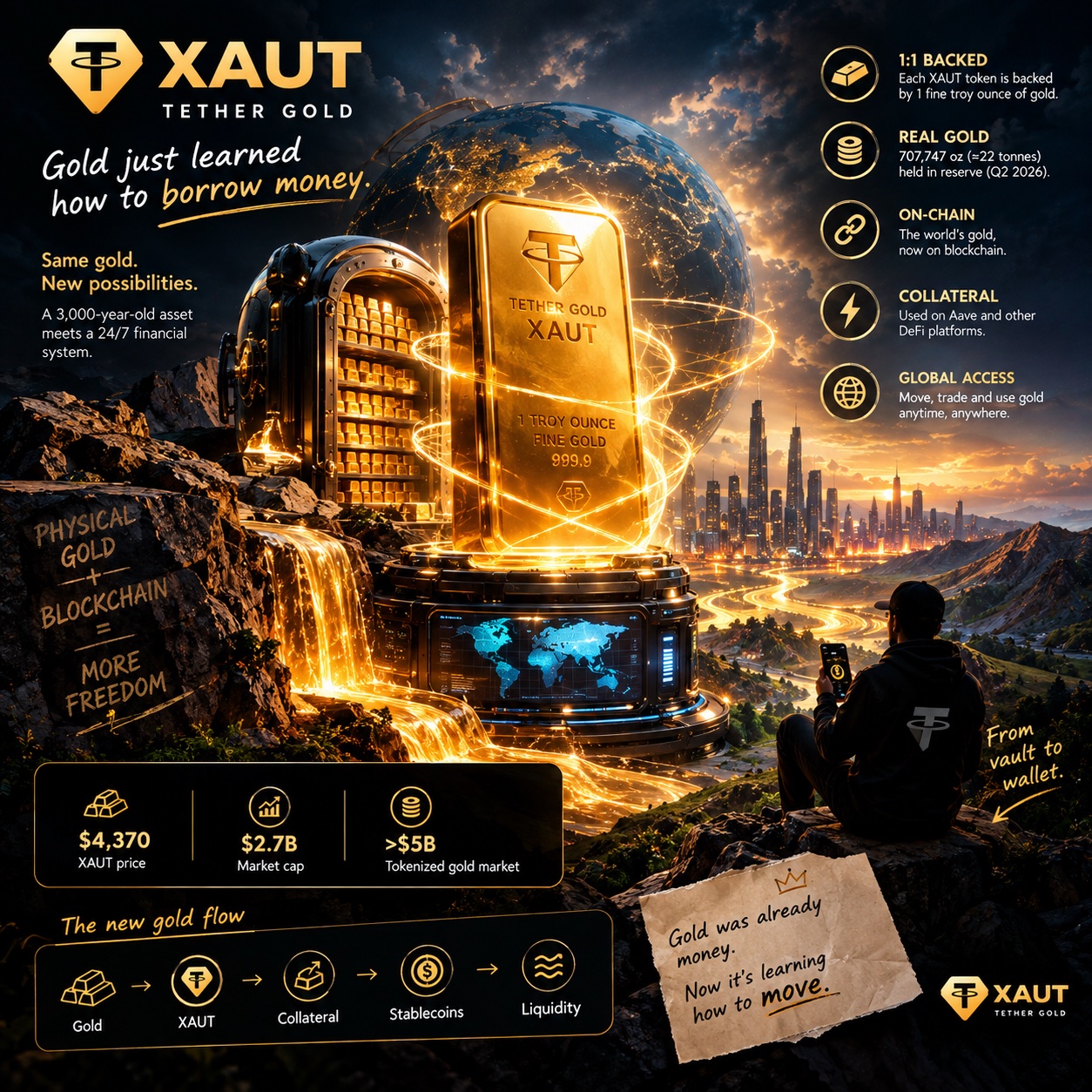
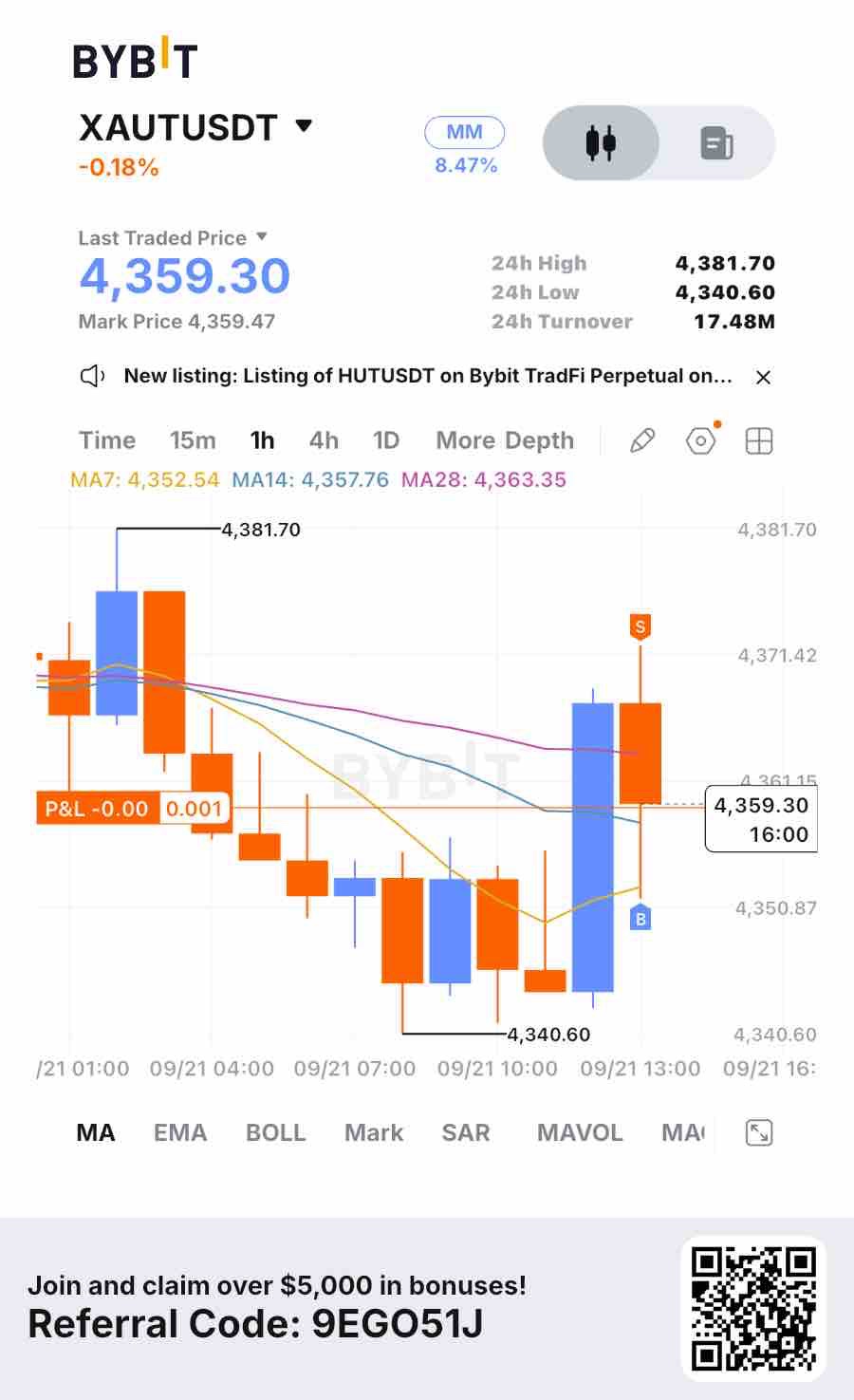
🪙 $XAUT — GOLD JUST LEARNED HOW TO BORROW MONEY Gold has spent thousands of years doing one thing exceptionally well: sitting there. It stores value. It survives currency crises. It doesn’t need a blockchain. But there’s a problem with gold that rarely gets discussed: gold is valuable — yet financially inconvenient. You can’t easily move a gold bar across the world at 3 a.m. You can’t plug it directly into a DeFi money market. You can’t send a fraction of a London Good Delivery bar across a blockchain. XAUT changes that equation. Tether Gold represents physical gold on-chain, with each token backed 1:1 by at least one fine troy ounce. Tether reported 707,747 ounces of physical gold, roughly 22 tonnes, backing XAUT at the end of Q2 2026. But here’s where the story gets much more interesting. The gold is no longer just being held. It’s becoming collateral. Aave has repeatedly increased the amount of XAUT that can be used against borrowed stablecoins as demand grew. One Aave risk review reported the XAUT debt ceiling reaching 86% utilization, with the additional capacity filled in less than 24 hours. And that’s the shift: Gold → XAUT → collateral → stablecoins → liquidity Suddenly, an ancient store of value is interacting with a financial system that never existed when the first gold coins were minted. The tokenized-gold market has now grown beyond $5B, while XAUT itself is around $4,370, with a market capitalization near $2.7B. So I wouldn’t frame XAUT as: “digital gold.” That’s too easy. The more interesting question is: What happens when one of the world’s oldest financial assets becomes programmable collateral? Because if gold can be held, transferred, traded and borrowed against on-chain, its role changes. It doesn’t need to become Bitcoin. It doesn’t need to become a stablecoin. It simply needs to become easier to use. And XAUT is quietly testing exactly that. Gold was already money. Now it’s learning how to move. 🪙$XAUTUSDT $SUIUSDT #ByXIMPACT #MyBybitAIPromptPlaybook #BybitAIBestReplies
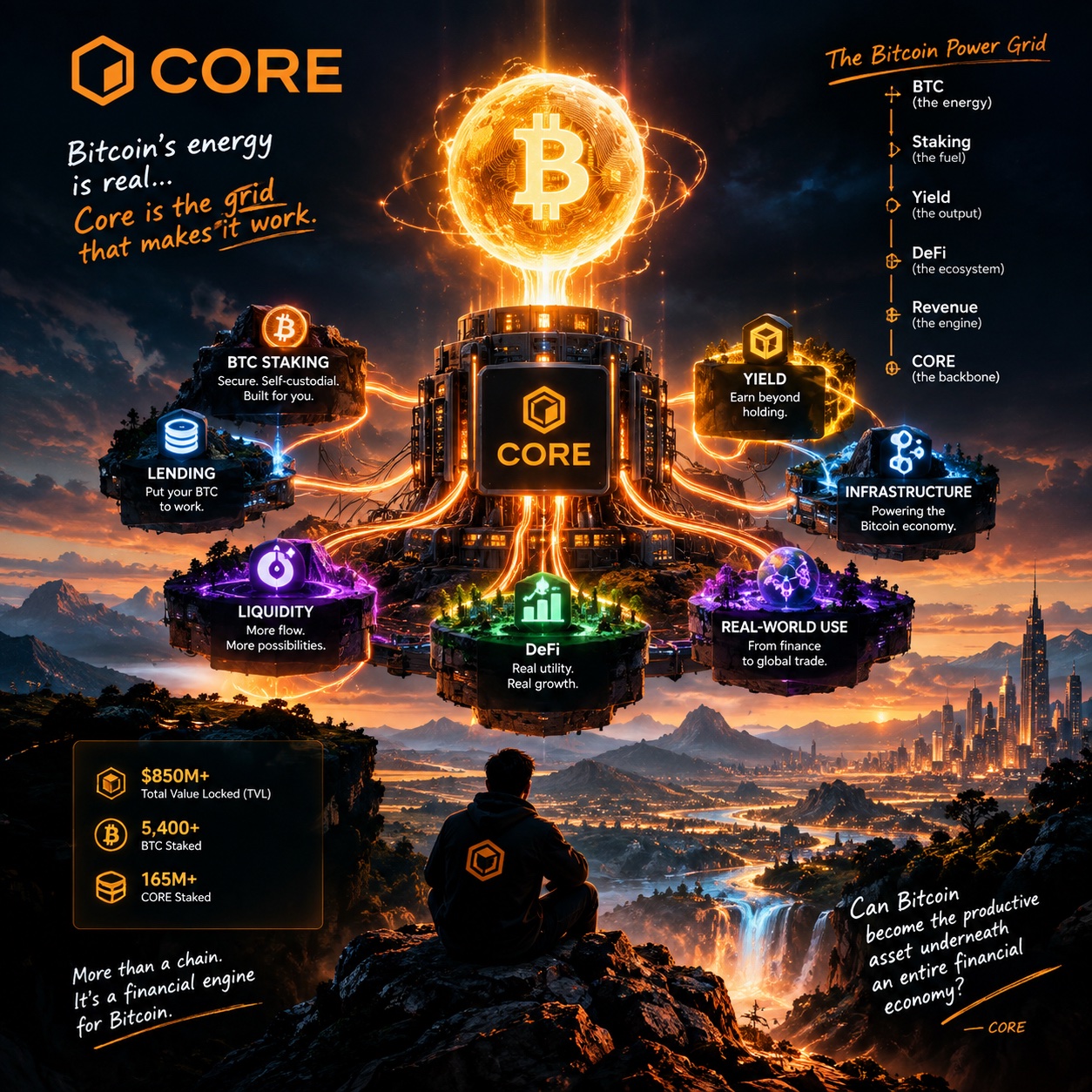
🟠 $CORE — BITCOIN HAS BEEN SITTING ON A TRILLION-DOLLAR ASSET THAT BARELY WORKS Bitcoin is incredibly valuable. But for most of its existence, BTC has mostly been held. Core is trying to change that. Its entire thesis is built around a simple question: What if Bitcoin could become productive capital without giving up its role as Bitcoin? Core’s self-custodial Bitcoin staking and BTCFi infrastructure are designed to let BTC participate in lending, liquidity, yield and other on-chain applications. Core currently reports $850M+ TVL, 5,400+ BTC staked and 165M+ CORE staked. But there’s a more ambitious idea underneath it. Core calls it the “Bitcoin Power Grid.” Think about Bitcoin as electricity. Bitcoin provides the raw energy — capital, security and liquidity. Core wants to build the grid that lets other financial products plug into it. BTC → staking → yield → DeFi → revenue → CORE And that last arrow is crucial. Core’s 2026 revenue roadmap is explicitly designed to turn BTCFi activity into revenue and CORE buybacks, while its architecture positions CORE as the asset used across parts of the Bitcoin Power Grid. But there is something investors shouldn’t ignore. Core recently went through an emergency hard fork after a validator-reward vulnerability, with more than 150M CORE permanently burned as part of the protocol response. Its SatPay product is also still in development, with regulatory and execution hurdles remaining. So this isn’t a finished story. It’s an experiment in something much bigger: Can Bitcoin become the productive asset underneath an entire financial economy? If Core succeeds, it doesn’t need to replace Bitcoin. It needs to make Bitcoin work harder. And that is the real $CORE thesis: Bitcoin is the energy. Core wants to become the grid. 🟠 $COREUSDT $BTCUSDT #ByXIMPACT #BybitAIBestReplies #TradFiOptions24/7
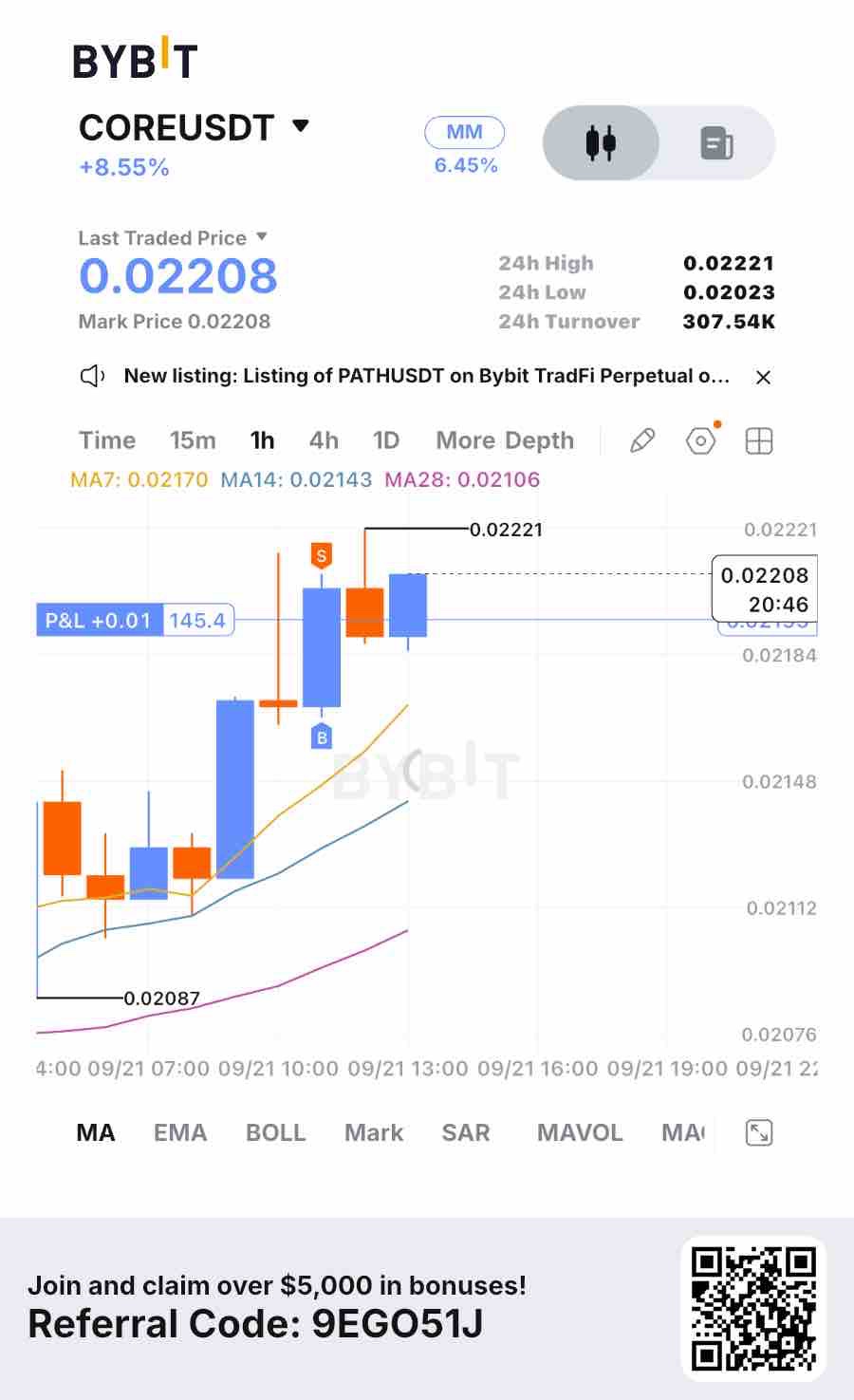
🔗 $LINK — THE INTERESTING PART ISN’T THE ORACLE ANYMORE There was a time when explaining Chainlink meant saying: “It brings real-world data onto blockchains.” That explanation is now too small. Look at what Chainlink is becoming. Prices. Proof of reserves. Cross-chain messaging. Tokenized equities. Collateral. Institutional settlement. Chainlink says its infrastructure has now enabled more than $34.1T in transaction value, while Q2 alone saw more than $7B of cross-chain token value migrate to CCIP. And the institutional footprint keeps expanding. Coinbase selected Chainlink for its tokenized-stock infrastructure. Wyoming adopted Chainlink Proof of Reserve for its stable token and migrated to CCIP. More recently, Chainlink Data Feeds expanded to Arc Mainnet. Now here’s the question I think matters: What happens when finance stops being confined to one blockchain? A tokenized stock can live on one network. Its collateral can move somewhere else. Its price can come from another system. Its settlement can happen on another chain. Suddenly, the most valuable infrastructure may not be the chain holding the asset. It may be the infrastructure making all those pieces understand each other. That’s where LINK’s thesis gets unusual. Chainlink isn’t necessarily trying to win the blockchain war. It is trying to become the translator. And today’s market is beginning to notice: LINK has been moving higher, with CoinMarketCap reporting a roughly 3% rise over the latest 9-hour window amid renewed institutional/RWA attention and a reported Chainlink Reserve accumulation. But don’t confuse ecosystem adoption with guaranteed token value capture. That’s still the part LINK has to prove. Because the truly interesting version of the thesis is not: “Chainlink will have more partnerships.” It’s: “If trillions of dollars become programmable, somebody has to make that financial world communicate, verify information and move securely across networks.” Chainlink is positioning itself for that job. And if it gets the job, the oracle label may eventually look ridiculously small. 🔗$LINKUSDT $PUMPUSDT #ByXIMPACT #MyBybitAIPromptPlaybook #BybitOdds
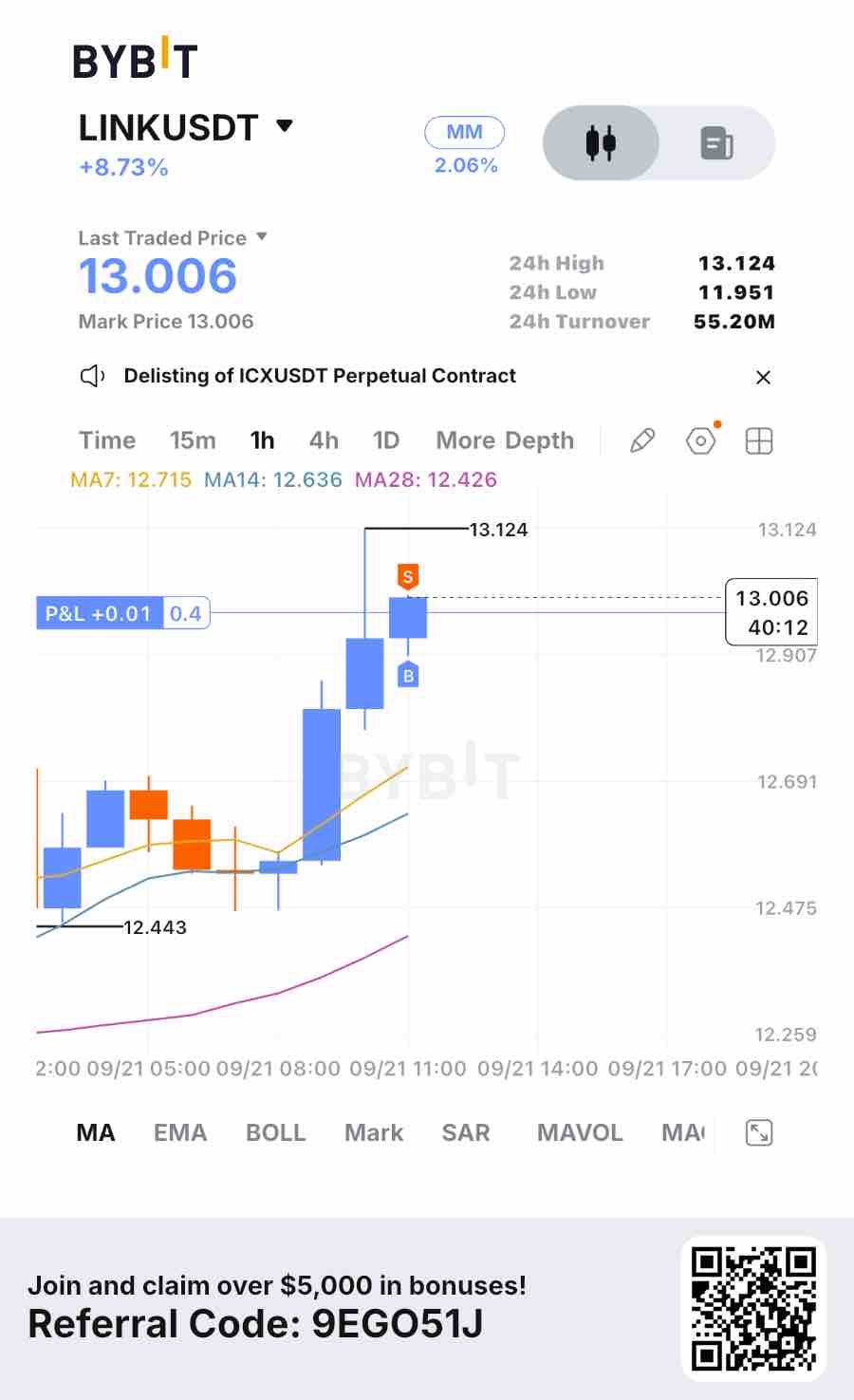
🟡 $BNB — THE CHAIN IS GETTING FASTER. THE REAL QUESTION IS WHAT THAT SPEED WILL CARRY. BNB has an unusual advantage in crypto: it already has the users. Now the network is trying to make those users capable of doing much more on-chain. The Pasteur hard fork went live on BNB Smart Chain in August. Since then, BNB Chain says its new block-building architecture has been producing roughly 28% more gas per block, while the network has been running above 95% utilization as validators move toward a 70M gas-limit target. That’s not just an engineering upgrade. It’s preparation for a much busier machine. And BNB Chain is pushing into some very different categories at the same time: AI agents. Payments. DeFi. Tokenized assets. High-frequency on-chain activity. The AI angle is particularly interesting. BNB Agent Studio lets developers deploy AI agents with their own wallets, identities and payment rails. Those agents can even automatically pay their own AI-service bills through x402. Think about what that means. Today, you interact with an application. Tomorrow, an agent could interact with the application for you. And if millions of autonomous agents start making transactions, paying for data, trading assets and interacting with smart contracts, blockchains don’t just need users. They need machines that can economically operate on-chain. BNB Chain is positioning itself for that world. And BNB sits underneath the machine. BNB is used across the ecosystem for gas, staking and other network functions, while BNB Chain’s expanding activity creates a larger potential economic base for the token. VanEck estimated around 34M monthly active users on BNB Chain earlier this year. But here’s the question I would keep hanging over the entire thesis: Can BNB turn enormous network activity into equally strong value capture for the token? Because adoption is one thing. Monetizing adoption is another. BNB isn’t merely trying to make a faster blockchain. It’s trying to become infrastructure for a world where people, money and AI agents are all transacting on-chain. If that future arrives, the interesting question won’t be: “How fast is BNB Chain?” It’ll be: “How much economic activity can this machine actually carry?” 🟡$BNBUSDT #ByXIMPACT #MyBybitAIPromptPlaybook #CPI3.4
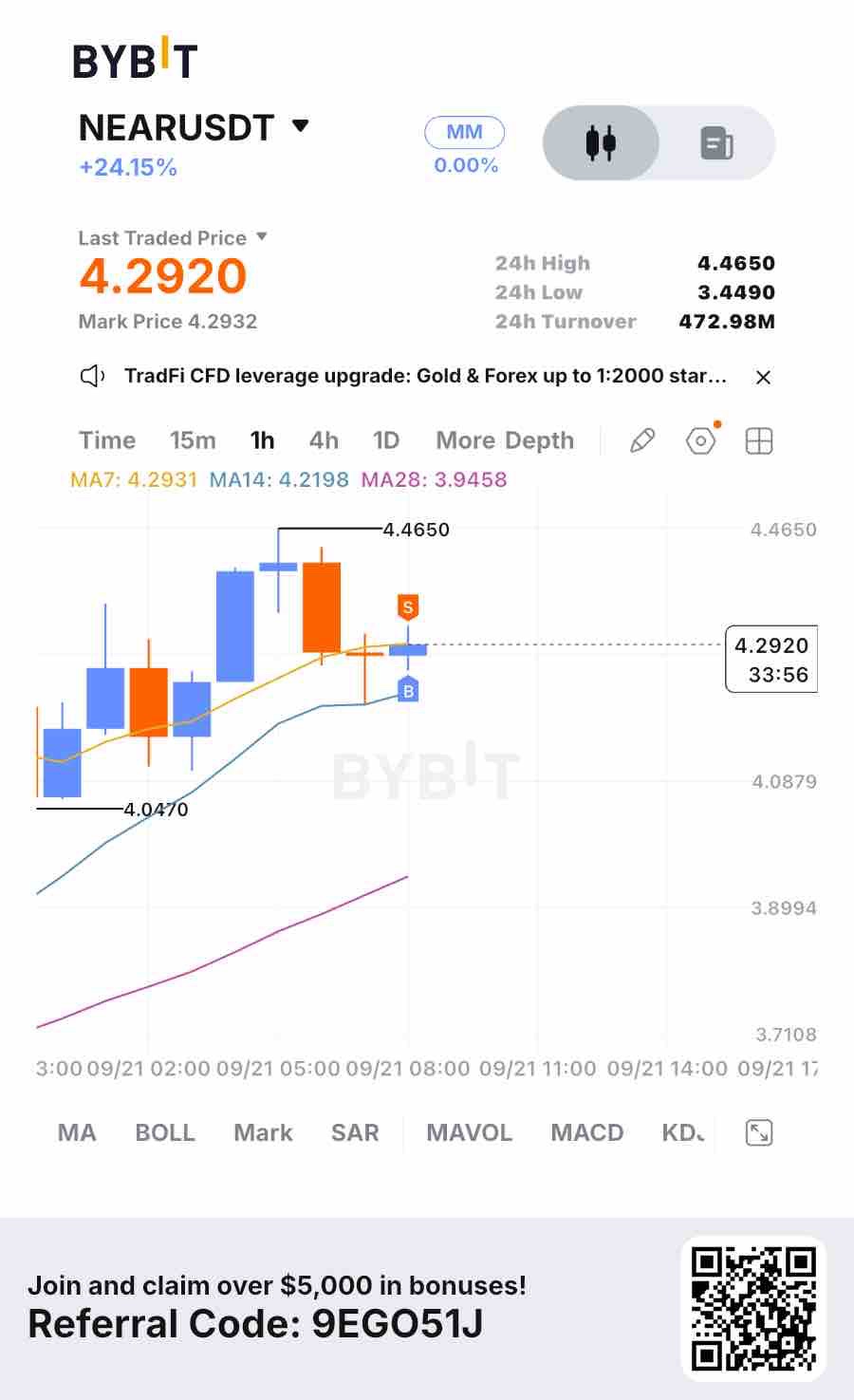
🟣 $NEAR — WHAT IF THE BLOCKCHAIN DISAPPEARS? Here’s the strange direction NEAR is taking: The user may not need to know which blockchain they’re using at all. That sounds small. It isn’t. NEAR is building around Chain Abstraction + NEAR Intents + AI agents — a system where a user can state what they want done, while the underlying infrastructure handles the chains, assets and execution. Think about the difference: Old crypto: “Which chain?” “Which bridge?” “Which token?” “Which wallet?” “Which network?” NEAR’s direction: “What do you want to accomplish?” That’s a completely different user experience. And NEAR isn’t stopping at cross-chain transactions. Its AI infrastructure is designed around private, verifiable computation, while its roadmap explicitly combines autonomous AI agents with cross-chain financial infrastructure. Then the market suddenly woke up. NEAR has gained more than 60% over the past week, with CoinGecko showing a current price around $4.2–$4.4 and roughly $2.16B in 24-hour trading volume. But here’s the part I’d pay attention to: The rally is happening at the same time the product thesis is becoming more concrete. On September 20, confidential perpetual trading powered by Hyperliquid was highlighted as a new NEAR ecosystem use case, while NEAR continues developing Intents and chain abstraction. So don’t reduce NEAR to: “AI coin.” That’s too small. The more interesting equation is: AI agents → understand the user’s goal → access any asset → execute across chains → settle automatically. If that architecture works at scale, NEAR isn’t necessarily competing to be the chain everyone visits. It could be building the layer that lets users stop caring which chain they’re on. And that is a much more ambitious thesis. The future of crypto may not be multi-chain. It may be chainless from the user’s perspective. NEAR is betting on that future. 🟣$NEARUSDT #ByXIMPACT #BybitAIBoughtTheDip #MetaMuse

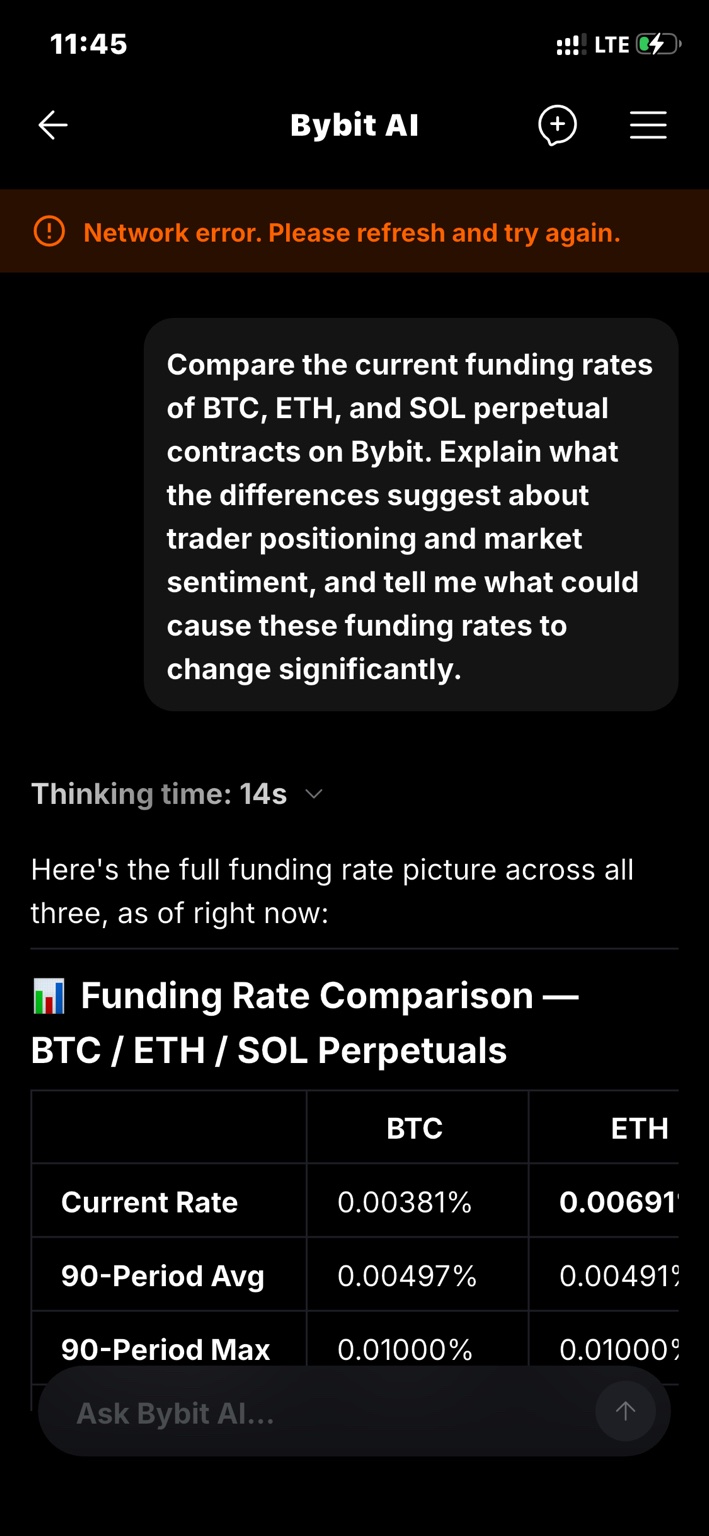
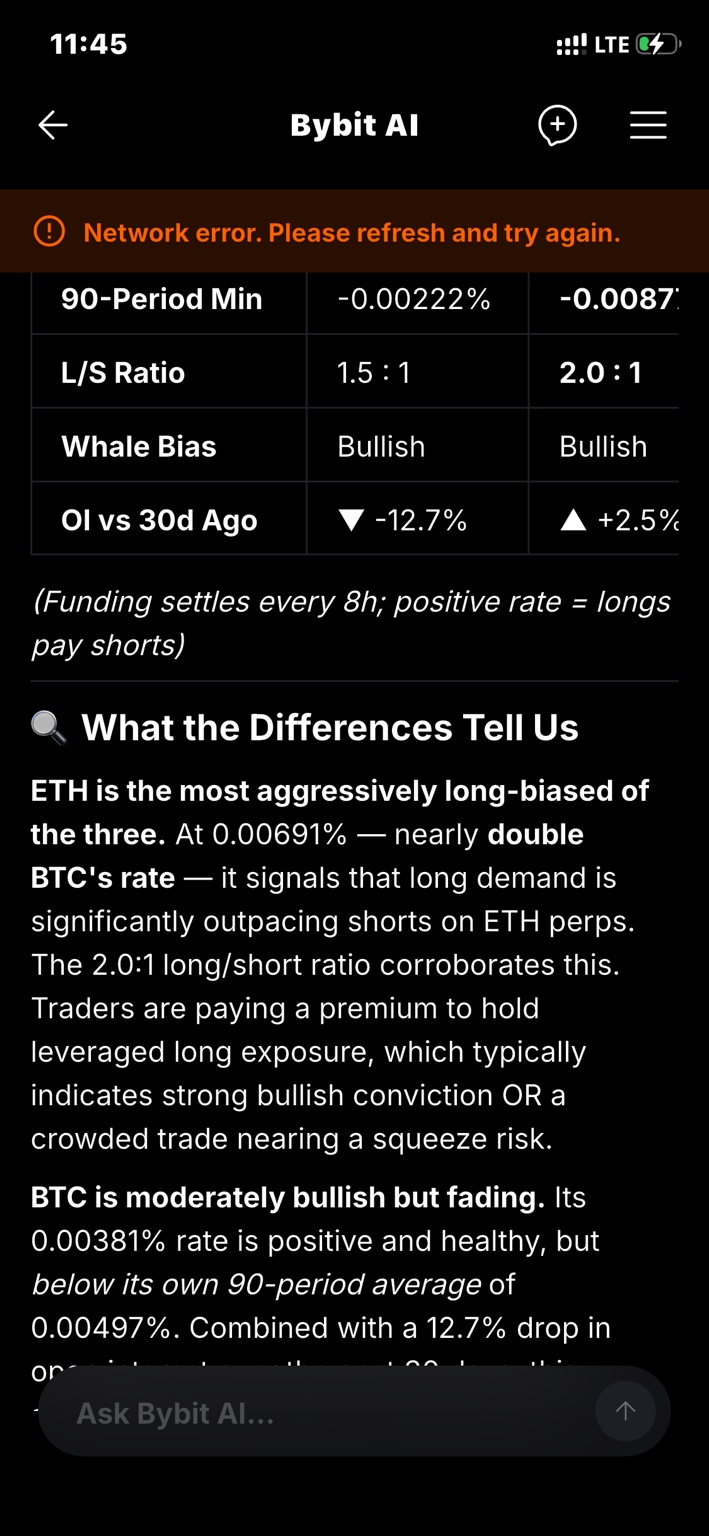
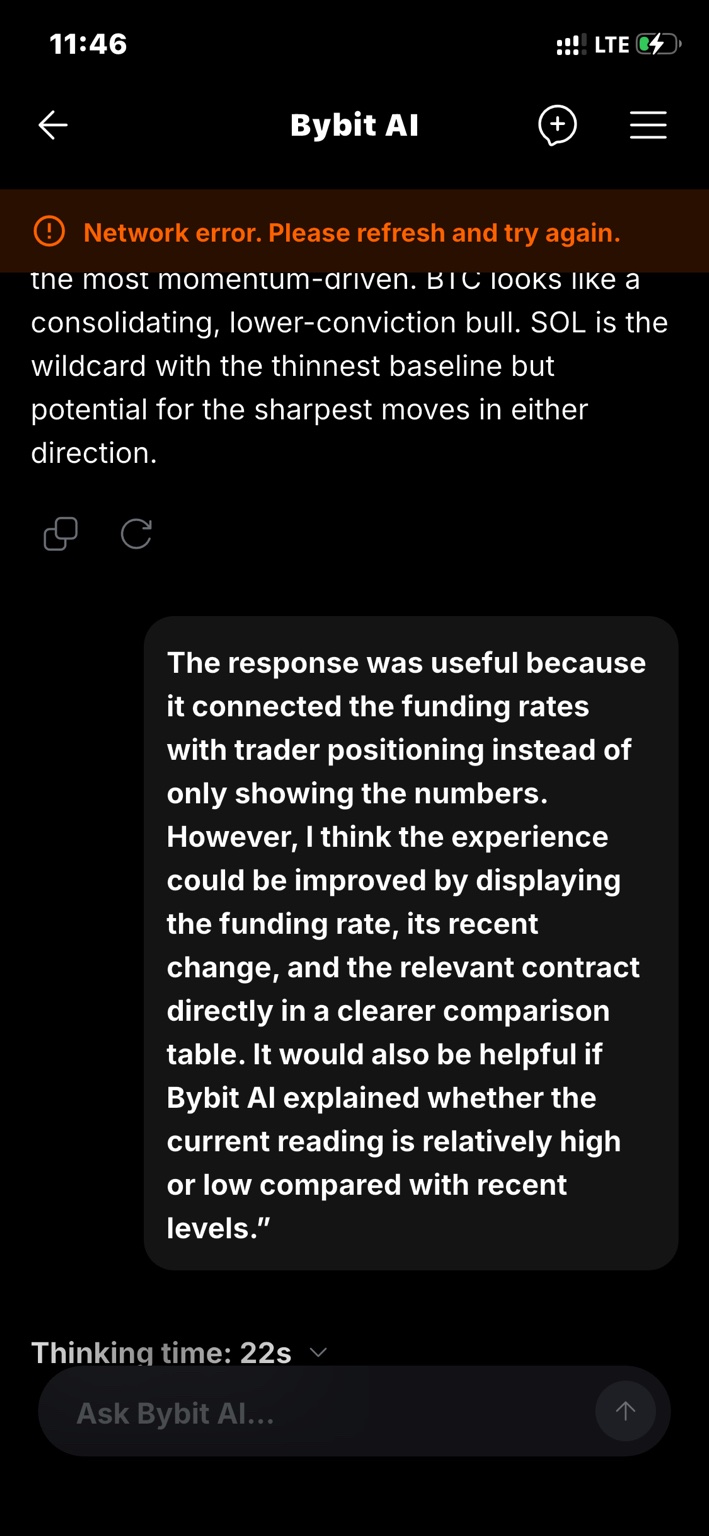
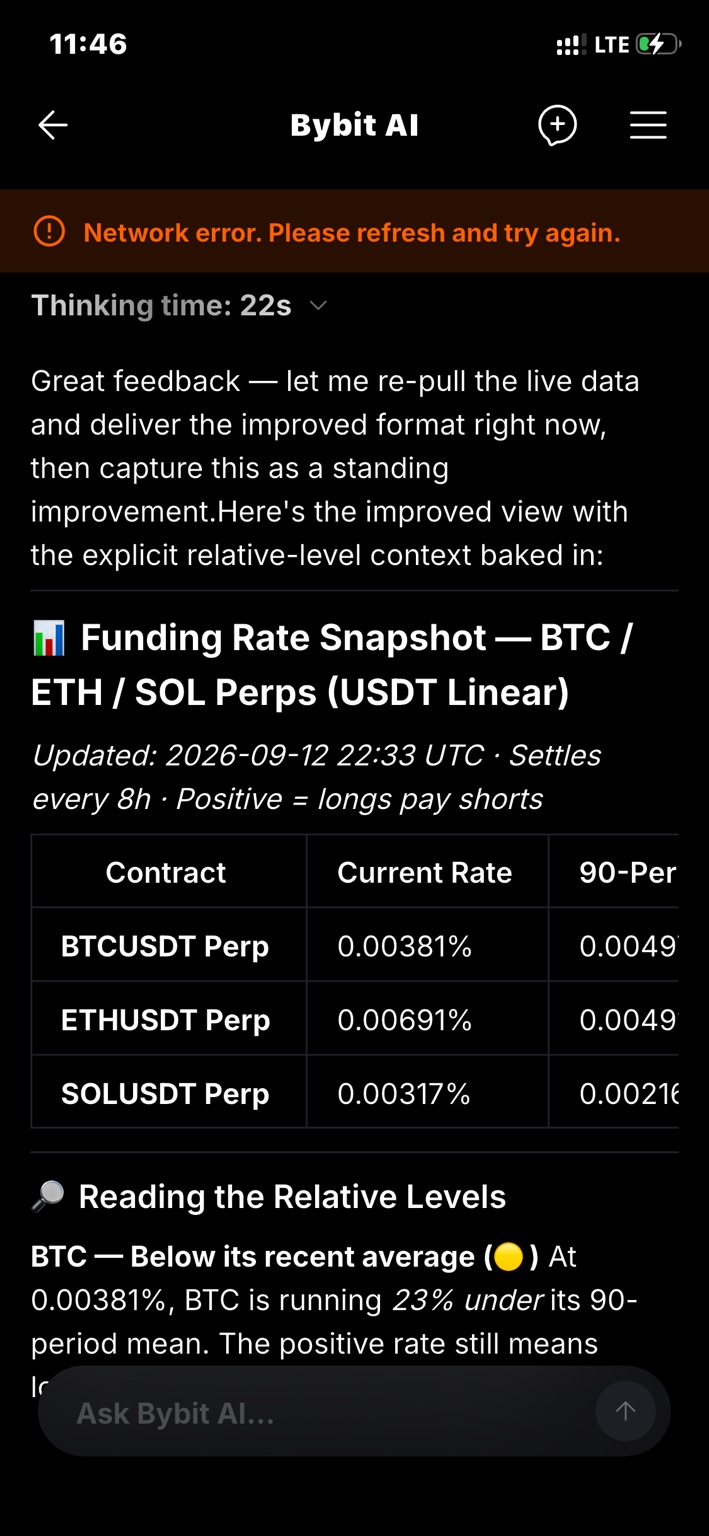
What I asked I asked Bybit AI to compare the current funding rates of BTC, ETH, and SOL perpetual contracts and explain what the differences suggested about trader positioning and market sentiment. What happened Bybit AI gave me a detailed comparison including the current funding rates, average rates, long/short ratios, and open-interest changes. It also explained why ETH appeared more crowded on the long side and what factors could cause funding rates to change. I then suggested making the comparison easier to read by showing the contracts clearly, comparing current rates with recent averages, and indicating whether each reading was relatively high or low. Bybit AI responded with an improved table that included these points, which made the analysis much easier to understand. What could be better The experience was useful, but I think it could be improved by showing the data source and timestamp more prominently and explaining how frequently each metric is updated. A simple visual showing the recent funding-rate trend would also make it easier to understand market positioning. I would also like a clearer distinction between the actual market data and the AI’s interpretation. Overall, the second response was noticeably better because my feedback directly improved how the information was presented. #BybitAIBestReplies #MyBybitAIPromptPlaybook